
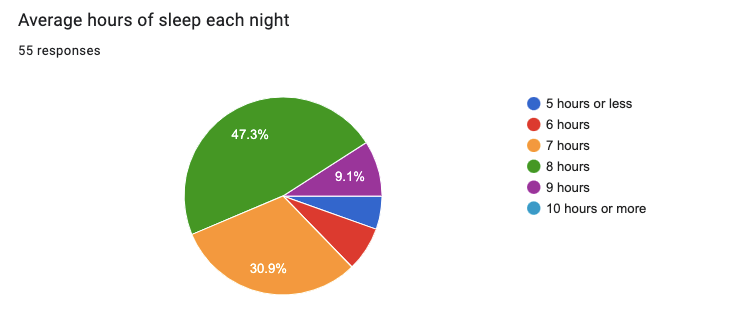
Each winter, I have my athletes fill out a goal sheet on Google Forms. I love meeting with the kids and discussing their goals and what they want to achieve in the new year. The goal-setting form includes a question about how many hours of sleep they average each night. I was pleased to see that over 60% of our team gets 8 hours or more of sleep. These are active teenagers, and I know they will be able to recover faster and feel better for their workouts and classes.
However, I am concerned about the kids who get 7 hours of sleep or less. We start practice at 7:30 AM each morning, and they must be going to bed at 11:30 PM or later each night. Most of them mentioned that the reason for less sleep was due to their AP classes or working late at night.
During a team meeting, I asked the team what three things they could do to get more sleep:
- Go to bed earlier: I laughed at this simple answer, but they were correct. Some of the kids admitted to staying up late because of social media or television/YouTube. These distractions can be a big reason for why kids are getting less sleep. I told them not to stay up late for anything they wouldn’t wake up early for. For example, would they wake up an hour early to check their Instagram?
- Prioritize: We discussed the importance of prioritizing and getting the most important things done first. Avoid procrastination and start homework as soon as possible. Don’t wait until 8:00 PM and then find yourself staying up late trying to complete a surprisingly difficult assignment. If they know they have a lengthy assignment, don’t procrastinate and wait until the last day to get started.
- Organize: One student mentioned how he plans out his day. He makes sure to prepare for the day ahead in advance, so he doesn’t have to wake up early to make his lunch or get his school clothes ready. With his work schedule, he has some flexibility and avoids staying up late to make sure he gets enough sleep on weekdays.
The chart below shows how athletes who get less than 8 hours of sleep greatly increase their chances of becoming injured. I find it interesting that the study shows that athletes who get 5 hours of sleep are less likely to get hurt than athletes who get 6 hours of sleep. When I showed this chart to our team a few years ago, one kid thought he should go from 6 to 5 hours instead of 6 to 7 hours! After looking at this chart, I’m going to start encouraging our kids to get 9 hours of sleep if possible. For our team, that would mean going to bed at 9:45 PM and waking up at 6:45 AM, which seems reasonable for many of them.

I have been guilty of being too focused on things like hard workouts, strength training, what they eat for breakfast, and haven’t stressed the importance of sleep. As coaches, we don’t hear ourselves talking on Twitter about how our team all got 8 hours of sleep! We are usually excited about sharing some great track workout or new drill. Maybe the key to a breakout season is more sleep and not more miles.

 Texas Running Coach