
The track and field season has come to an end, and now it’s time to turn our attention to cross country. Summer training is when athletes put in those early morning miles to reach their team and individual goals. I have always enjoyed summer training and see it as an opportunity for our team to bond and reach new levels of fitness together.
Below are four types of runs that we focus on during the summer.
Long Run: 20% of an athletes weekly mileage. During the season the pace of the long run is faster, but during the summer we relax more and focus on getting the distance in for the day. With the heat I’m not going to push an athlete for an extended period of time.
Distance Runs: These runs make up the majority of our summer training. We maintain a pace around 2:30 minutes slower than an athlete’s mile PR. These are my favorite runs as they provide an excellent opportunity for team bonding, as we run at a conversational pace.
Mile Pace Work: Throughout the summer we have one workout a week that is focused on mile pace. Start with something as simple as 4×200 and build to 12-16×200 at mile pace towards the end of the summer. Gets athletes out of the plodding and helps when we transition to more serious work in the fall.
Progressive Runs: Again because it’s hot we try and focus on finishing one to two runs a week faster. For example a 5 minute miler would run 4 miles at 7:00 pace and then 2 miles @ 6:00 pace. Workout isn’t crazy hard and they feel good to have finished strong and fast.
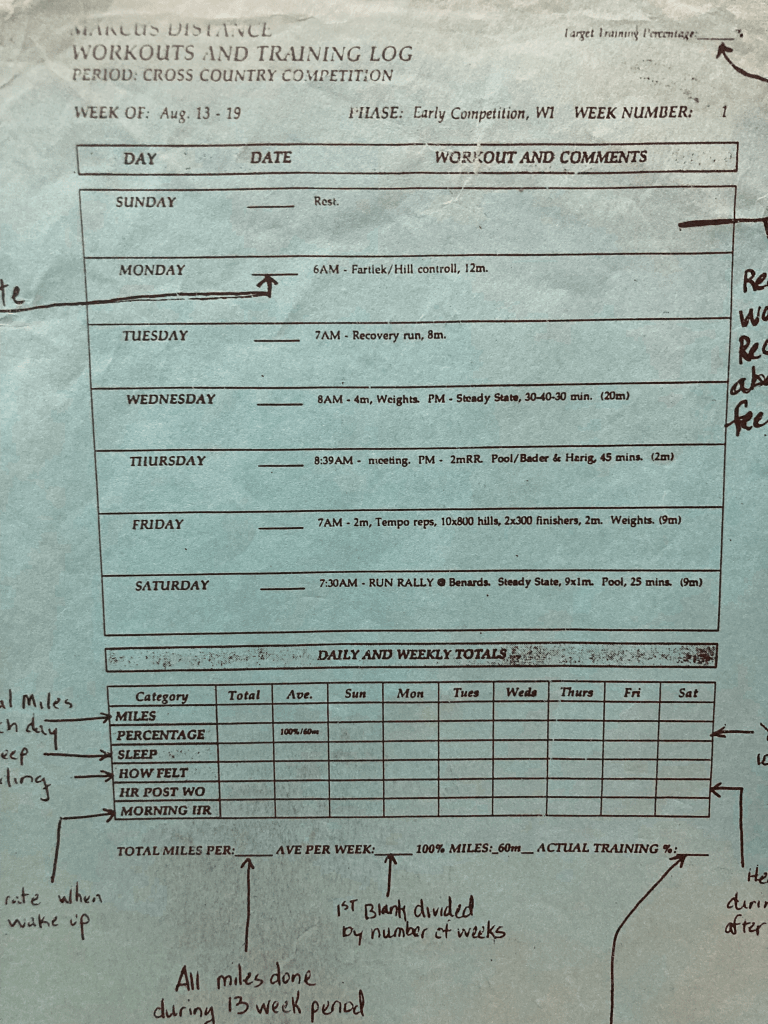
We track our summer training on a google document. I know many teams use training logs and record their mileage in a notebook. We did this as well when I was a runner at Marcus High School. Our coach Steve Telaneus did an amazing job of focusing on the details and it showed in our training logs.
Marcus Cross Country Training Log– 1997
Flower Mound Cross Country Training Log- 2023
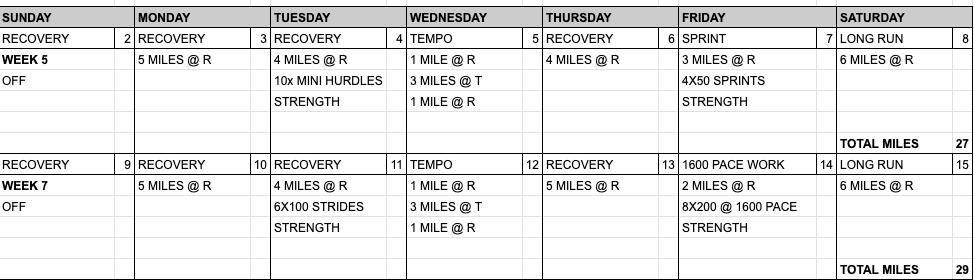
While our training logs may have different formats, most of our training remains the same. Usual tempos/progressive runs, strides, hills, and of course recovery/distance runs. No matter the training I think the teams that are most successful in the fall are the teams that were the most consistent in the summer.
Good luck to all teams this fall and I hope everyone has a great summer!
Steve Telaneus: Developing a Successful Cross Country Program: The Complete Guide from A to Z

 Texas Running Coach