

After a two-week Christmas break, we returned to school this past week. Excited to start preparing for the track and field season, I was looking forward to our early workouts. Unfortunately, we have had some inclement weather, and we had to cancel school for the past two days due to snowstorms (well, snow for us in Texas). Now comes the difficult challenge of preparing athletes for the track season after possibly missing three weeks of training. Some athletes have been more dedicated and are ready to “drop the hammer!” while others are far behind, and it’s a struggle just getting them to run again. During the winter, I try to start with introductory workouts that can be challenging for both groups and help us to reach our goals later in the season. Below are five workouts that I like to use during the early parts of our track and field season.
Winter in Flower Mound!

Finish fast
Finish fast workout is a 1 to 2 mile pick up at the end of a normal distance run. Athletes try and run their last miles at 1 minute slower than their mile personal record. When I want something more structured we will do the last mile fast on the track to help the athletes with pacing. For the athletes that are in shape this is a fun way for them to run fast at the end of their runs. For the athletes not in shape I’m just hoping to see an increase in effort and hope they at least run the last mile faster than their first mile. I think this is also a great workout during the summer and for longer runs.
200 meter repeats: Another great introductory workout to the track and field season is 200 meter repeats at mile pace. After a usual 1-2 mile warm-up, athletes will run 8-10×200 meter repeats on the track at mile pace. For their recovery, they slowly jog another 200 meters back to the start. This workout is usually very easy, and we will eventually build up to doing more repetitions of running 400 meter repeats later in the season. Some athletes make the mistake of running their recovery 200s too fast and end up making the workout harder than necessary. I’m looking for the fast 200s to be run at mile pace and am not overly concerned about their recovery as long as they are not walking.
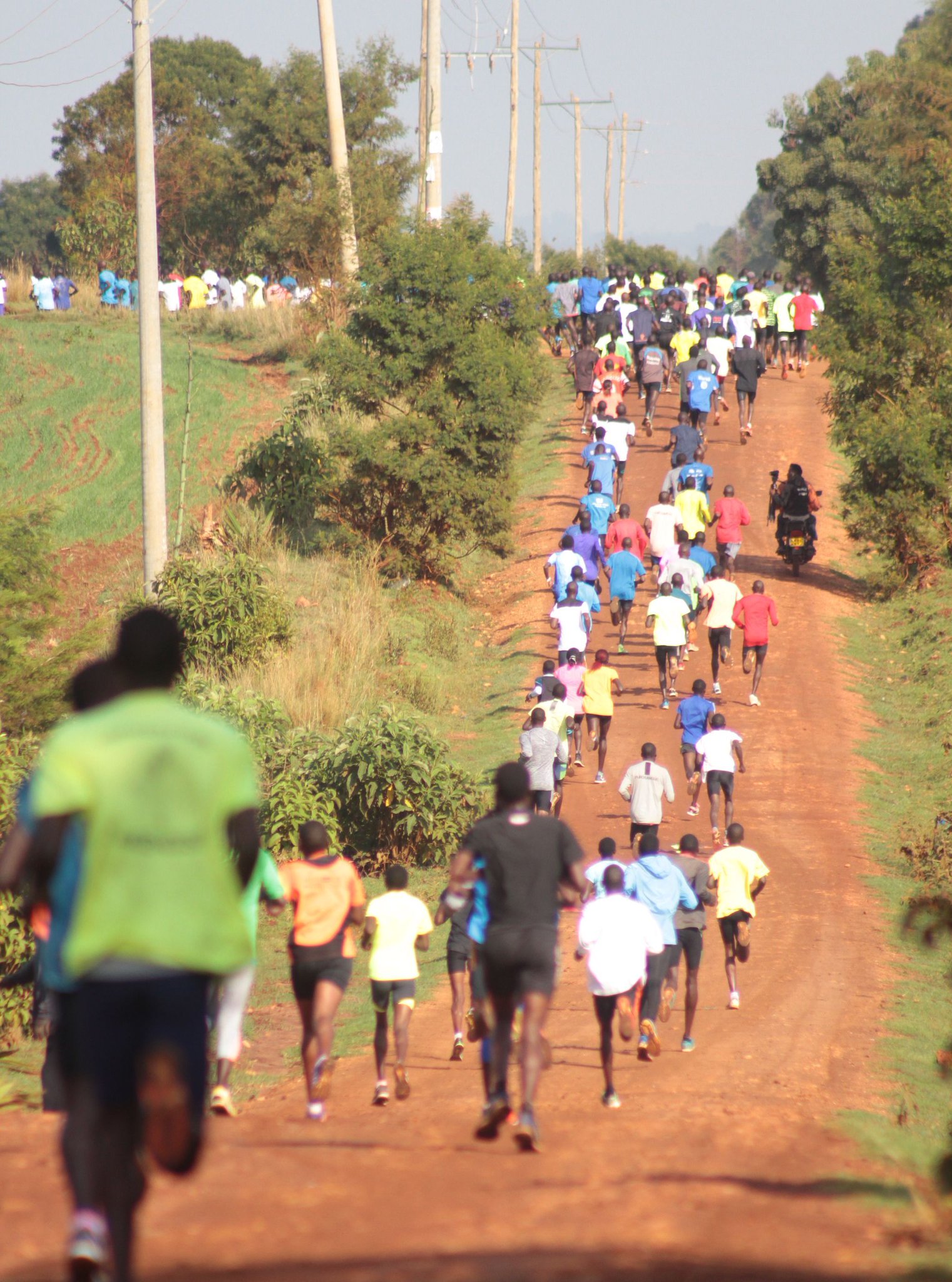
Kenyan Fartlek: My favorite fartlek workout for this time of year is 1 minute on at 5k pace and 1 minute off at recovery pace. As you can see from the picture below, this is a famous workout done in Kenya with hundreds of athletes. The Kenyan Fartlek can be run in a park or on the track and is great for those windy or cold days when it’s hard to hit times in a more structured workout on the track. For our higher mileage athletes, we start our running at 30-40 minutes total, and for our lower mileage athletes, they run for 20 minutes total. Like the 200-meter repeats, I’m not overly concerned about their recovery pace and just want them running.
Threshold Reps
For those of you who have been following this website for a while know I love threshold reps. Threshold reps can be difficult especially for younger athletes. During the beginning of the track season reps can be shortened to 800-1000 meters. After each repetition athletes take 1 minute standing rest. For the threshold reps in the beginning of the season 60-75 seconds slower than their mile PR pace is a great starting point. Athletes who run more mileage (greater than 50mpw) can shoot for 8,000 meter worth of volume and athletes running less can shoot for 6,000 meters worth or volume.
Strides: This last one isn’t really a hard workout, but more of a reminder to keep in strides during the winter. Strides performed after distance runs can help athletes transition to faster track workouts, ensuring that they maintain their speed. I like to rotate between doing 6×50 meter strides and 6×100 meter strides, When we run 50 meter strides, I notice the younger athletes, especially, will run significantly faster. It’s important to incorporate these strides early in the season to help bridge the gap from distance runs to faster track workouts.

 Texas Running Coach
These winter workout suggestions are fantastic!
The ‘Finish Fast’ method is a great way to build endurance and speed, and incorporating strides post-run is a smart strategy for transitioning into more intense track workouts.
Thanks for sharing these practical tips to keep training effective during the winter!
LikeLike