
This summer I’m trying to read one book a week and improve my chess game (chess is not going well!). I’ve read Peak Performance by Brad Stulberg and Steve Magness before, but it’s been a while, and I felt it would be good to reread it.
Here are my notes from the book:

Mental Fatigue Can Hurt Physical Performance
The authors discuss the importance of simplifying our lives and placing mental focus on what matters most. We may not realize it, but small decisions throughout the day can accumulate and contribute to mental fatigue.
When it comes to running, I believe it’s important for athletes to stay in a routine. Decisions especially on race day should be minimized to help athletes stay stress free. For example, the night before a meet, everything should be laid out and ready for the morning. Athletes shouldn’t be scrambling to find their favorite pair of socks. They should wake up and be ready to go.
They should also have a pre-race routine: knowing when to use the restroom, when and how long to warm up, and exactly what time they want to be “race ready.” Eliminating decisions and sticking to a routine allows athletes to focus on what truly matters which is running at their best.
As a coach, I think it’s just as important that we stay in a routine on meet days. I’ve seen coaches give great motivational speeches before races. If that works for you and your team, it’s important to do it consistently throughout the season.
Early in my coaching career, I made the mistake of changing my approach just because it was the state meet. One year, I told our boys right before the race that it was important to get out fast to avoid an early bottleneck. The advice was fine but the timing was terrible. I normally don’t speak to them right before races, and they looked nervous. We went out fast and, unfortunately, faded in the final mile and missed the podium. Lesson learned: be consistent and stick to the routine even as a coach!
Focus on a Single Task
In Peak Performance, the authors debunk the myth of multitasking. We’re faster and more efficient when we focus on one task at a time. They also emphasize the importance of removing distractions like cell phones when working or studying. Even having a phone in the room can make us feel like we’re missing a message or notification.
I no longer teach in the classroom, but I always felt it was important to have students put their phones away during lectures and discussions.
Growth Mindset
It’s important to believe that ability can be improved. The most successful people show up consistently. I always tell our team that consistency is the key to success. Athletes who show up to practice and give their best effort will, in the long run, see the most improvement.
Another example of a growth mindset is approaching challenges with a positive attitude. Knowing that tough situations like a hilly course or a hard tempo run will ultimately make us better runners helps shift our mindset. We should avoid thinking of these challenges as just hard or painful.
Sleep More
The book also discusses the critical role of sleep in performance. In the 1940s, the average American got 7.9 hours of sleep per night. Today, that number is down to 6.8 hours—much of the blame going to blue light from screens.
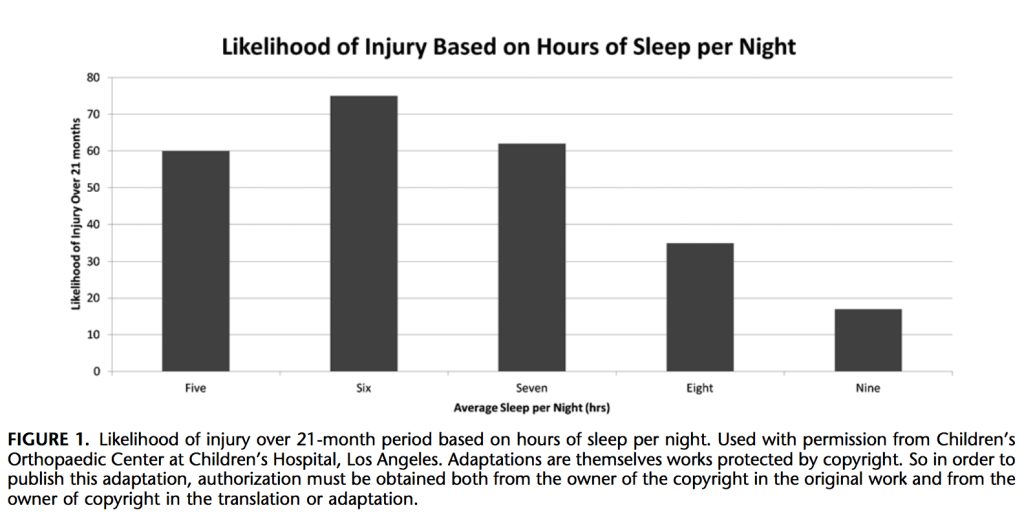
Many teams do a great job of working hard, but they fall short when it comes to resting and sleeping enough.
Quick google search came up with this study. Imagine how much healthier all of our teams would be if they could get 8-9 hours of sleep a night!
Having a Purpose
One of my favorite parts of the book is the chapter titled simply Purpose. The authors say, “Having a purpose fuels motivation, resilience, and performance.”
With our runners, I think it’s important they focus on their teammates and look for ways to help each other improve. From my own experience running at Texas A&M, I found that when I focused on pushing my teammates during workouts, I thought less about my own discomfort and instead was motivated by the team’s success.
Motivation
Perceived effort can actually be lowered through increased motivation. It’s important to remember our goals and why we’re pushing hard in workouts and races. A ten-mile run might feel easier if an athlete is thinking about how it will help them break their goal time of 5 minutes in the mile. Likewise, an athlete may run faster in a race if they know their performance could help their team win a state championship.
Final Thoughts
I thought the book was excellent and appreciated how easy it was to read. While not specifically a book about running, it covered many topics that relate directly to it. I also appreciated its emphasis on overall well-being and how we can live healthier lives.
If you’re interested in purchasing the book, you can do so at the link below:

 Texas Running Coach