Goal Setting

Cross Country season is over and it’s now time to prepare for the upcoming track and field season. After taking a complete break from running we slowly build the duration and intensity of our workouts. Athletes begin to get excited about competing again and running personal records on the track. I feel goal setting is very important in keeping our athletes focused and motivated for the duration of the track and field season.

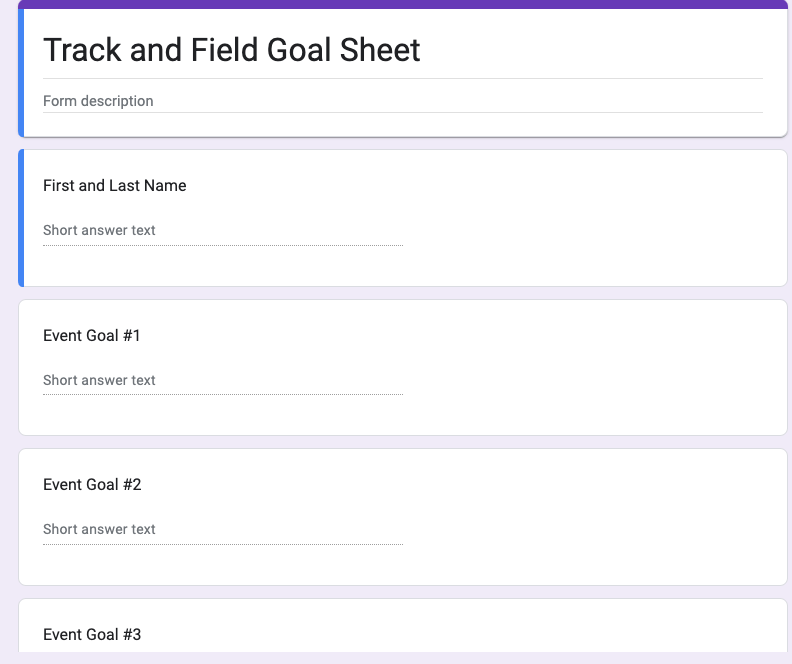
I send out a google form to our team and ask them to fill out three type of goals

1: Individual Goals– Individual goals are focused on times they want to run that season. Individual goals also include things like wanting to run on varsity or place top three in one event at district.

Feedback I give for individual goals are whether they are achievable for that season. If a goal seems a little out of reach I will ask them to include a short term goal as well just in case they don’t reach that ultimate goal. For example if a 5:10 miler wants to run 4:40 and 10:00 I may encourage them focus on breaking 5 minutes in the mile first.

2. Process Goals– What are they going to do in order to reach their goals for the season? Often times they list something training related like run 10 percent more miles each week, but most of the time kids list something like getting 8 hours of sleep or eating more fruits and vegetable at each meal.

Feedback I give for individual goals is to make sure they are measurable. Don’t just put down get more sleep or drink more water. I’ll also give them some constructive criticism like focus on being more consistent in your training and run 6 days a week. I’ll also focus on the little things like make sure you show up to practice on time and complete all strength training exercises.

3. Team Goals- Track can be a very individual based sport. I want our athletes focused on how they can not only make themselves better but their teammates as well. If we have a great chance to win district for example I want our entire team focused on that goal.

Feedback I give for team goals is to let them know that I’m excited about the team as well. The team is an important aspect in track and field I want them to know what they can do to help us have a successful season. When we focus on the team I hope we will get less students asking to sign out before the conclusion of the meet or kids more willing to step up and run that 4×400 Relay.

Here is the link (click the picture) to the goal sheet form we used this year for our track and field team. Feel free to make a copy, edit and use for your team.


And one last story to share on why goal setting is important to me: During my time as a student athlete at Texas A&M, I had the privilege of listening to a speech by Billy Mills. Billy Mills is known for being the 1964 Olympic Gold Medalist in the 10K (my event in college!). His victory is still considered one of the biggest upsets ever. One thing I will always remember is his personal story on goal setting for the 1964 Olympics. He asked the crowd to raise their hands if they set goals and of course with a room full of collegiate athletes, we all raised our hands. Then he asked who had their goals in a place they could see them every day; half of the room continued to keep their hands raised. Lastly, he asked who had their goals on them that night; all of the athletes lowered their hands. He then pulled his wallet from his pocket, opened it, and showed the room an old folded piece of paper. On that paper he told us was his goal for the 1964 Olympics, which was to win the gold medal.

Billy Mills at the 1964 Tokyo Olympics

What I look for in a cross country meet

I’m currently working on our cross country schedule for the 2023 season. It seems like I have been falling behind other coaches on getting this done! As I put together our schedule I usually think about the following things before committing to a meet.

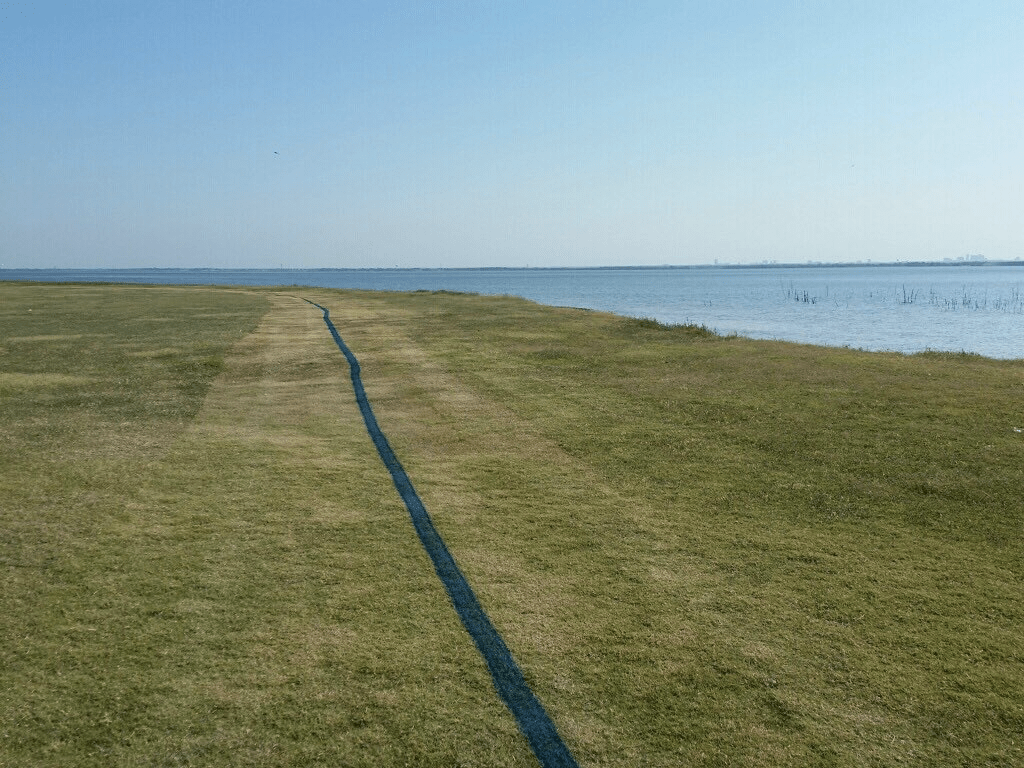
2019 Flower Mound Invitational at Lake Park in Lewisville

  • Meet Management: When our team goes to a meet I hope it is well run. The meet starts on time, results are posted, course is accurate in distance, and there are enough bathrooms for the runners. Extra bonus if a meet has starting boxes!
  • Course Quality: Course is well maintained, wide starting line, well marked, wide enough course to allow passing and avoid bottlenecks. This is high school cross country and I don’t expect, nor do I want my team to run on a golf course. I do try and avoid courses that have too many rocks or holes. We are trying to build towards district not find a way to sprain an ankle.

Watch out for gopher holes at the Region 1-6A Championships in Lubbock

  • Meet Competition: Each year is different. With experienced teams I may look for a more challenging schedule. If we have a younger team we may try and find meets that will build our confidence. We are fortunate in North Texas to have both options available without having to travel out of town. For individual athletes who are looking to place high at state I think it’s important they face strong competition. We want them to be pushed and mentally prepared for what they will see in the postseason.
  • Number of Meets: I usually schedule 6-7 meets in a season. Our varsity athletes who have more experience may only run 4 meets before the start of district. I know the UIL allows us to have eight meets in a season, but that seems excessive and requires us to race every weekend starting in the middle of August. I think it’s great for JV and Varsity athletes to have a time during the season to focus only on training.
  • Timing of the Meet: We like to test ourselves at the beginning and end of the regular season. First meet I like to see how we are doing after our summer training. Towards the end of the season I want to see how we have progressed and make sure we are sharp and ready to go for district. This year our first 5km cross country meet is at the Telaneus Invitational. This meet is one of the biggest most competitive meets in the DFW area. Our last regular season meet is the Nike South Invitational. Each year we look forward to racing the best teams in Houston and who knows what teams will also make the trip to run at the Nike Regional Course in The Woodlands.
  • Proximity: Sometimes it’s just nice to hop on a bus and get there within 15-20 minutes. Families will usually travel and cheer on their child if the meet is closer.
  • Tradition: Many times I like to go to the same meet each year. For example the Telaneus Invitational is the same course and it gives us a great gauge/idea on our level of fitness. We can look at our finish times and examine our splits and finish times from previous years.
  • Coaches Hospitality: This isn’t the most important, but it’s nice! Some meets are long and it’s hot in Texas! Water, Gatorade can go a long way for coaches that are running around the course coaching their team.
  • Meet Start Time: I usually try and avoid meets that start at a later time in the morning. If we are going to a meet in August or September I don’t want my athletes running at race past 11 AM. It’s just too dang hot and it does not build confidence or give any indication of an athletes fitness. Meets typically have the JV runners compete last and for some of these kids it’s hard enough to run a 5k in good weather let alone with the temps climb into the 90s.
  • Try Something New: When creating our schedule I look at adding a new meet to our schedule. We can get in the habit of running the same meets against the same individuals and teams. Running a new course is fun and provides new challenges.
  • Different Distances: In the beginning of the year we like to run shorter distances or run a relay race. I think this is especially great for our freshmen athletes as we try and build their confidence up to race 5km. This year our first meet is the Southlake 3200 on the track. I know it’s weird to start at cross country season on the track, but it’s something all of our athletes can handle. For our returning athletes they can try and set a 3200 meter PR which is a good motivator.

The second meet on our schedule is the Greenhill Relays. The meet format is a 4×1.5 mile relay. Each athlete runs with a glove, which in this meet serves as a baton. I like running the relay because it gets the kids to focus more on the team aspect of cross country.

Nothing like watching distance runners hurdle hay bales @ Greenhill Relays

Coaching Freshman Runners

We just started our summer training with the team, and we have many new faces. I’m currently trying my best to learn all their names. Each year, my goal is to help freshmen have a smooth transition from middle school to high school, considering they had only one month dedicated to cross country in middle school compared to joining a team that trains year round. Here are some of the things we focus on to support our freshmen runners in our program.

Training

To ensure the safety and prevent any athletes from getting hurt or quitting due to intense training, we take a slow approach with new team members. Although I aim to push them, my primary goal is to have the freshmen ready to race three miles when the season begins. During the first week, we keep it simple by focusing on dynamic warm-up drills, running 1-2 miles, and cool-down stretches.

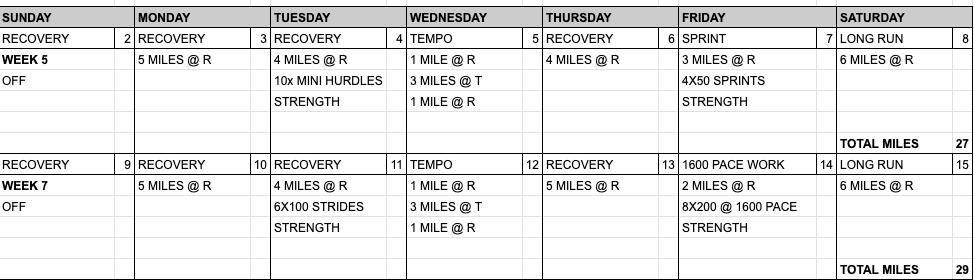
We have seven training groups throughout the summer, with the freshmen starting in group seven, which has the lowest weekly mileage. Below is an overview of our team’s first full week. I believe 10 miles for the first week is reasonable and understand if an athlete needs to take walking breaks.

Building Relationships

During the summer, I prioritize building relationships with our freshmen athletes. I make an effort to arrive at practice 15 minutes early to greet them by name (if I can remember!) as they enter. After their workouts, I ask them about their run and tell them good job before they leave. Although it may seem simple, I hope that by the end of the summer, we will know each other better and feel more comfortable communicating.

I also encourage our veteran athletes to welcome and learn the names of the freshmen. We discuss the experience of joining a new program and emphasize the importance of being friendly and welcoming to all athletes. Additionally, once a week, we have a team breakfast at one of the athletes’ houses. I intentionally do not attend these breakfasts, as it provides an opportunity for the team to bond and get to know each other without the coach present.

Learning about Running

Summer practices serve as an opportunity to educate the freshmen about the basics of running. Topics such as the significance of proper footwear and nutrition in the morning are discussed during our morning meetings or in a more casual manner after their workouts. For instance, we recently talked about the equation “STRESS + REST = GROWTH.” As the freshmen experience the stress of daily running, we emphasize the need for adequate sleep to facilitate recovery and growth as athletes.

We also address the importance of having appropriate running equipment. Often, we find boys wearing excessively long shorts or girls opting for thick, oversized cotton shirts. We discuss the benefits of wearing breathable lightweight materials, especially during the hot summer months. It’s worth noting that running clothes are available at various stores in our area, and they don’t need to be expensive brand items like Lululemon for our practices.

In addition to running attire, we encourage our athletes to replace their middle school gym shoes with 1-2 pairs of running shoes. If possible, we suggest having two pairs to rotate during the summer. This practice helps prevent overuse injuries and allows the shoes to air out for a couple of days.

Safety

One of the most important topics we stress over the summer is safety while running. We make sure they understand the importance of utilizing sidewalks whenever possible. In cases where sidewalks are unavailable, we instruct them to always run against oncoming traffic. Additionally, we emphasize the significance of waiting for vehicles to come to a complete stop before crossing streets or intersections. Lastly, we strongly encourage the practice of having a running buddy. As our groups can sometimes spread out, it is essential for athletes to have a teammate with them for added safety and support.

Freshmen athletes with running experience

One last thing. We are fortunate to have running clubs and summer track programs in our area. It’s not uncommon for us to get athletes in high school that have previous running experience. With these athletes we talk about their training experience and try to put them in the correct training group. Usually I err on the side of caution and have them run the same or less mileage than they did in middle school. I do this because our training is still most likely different and they will need time to adjust. I also feel that most middle school kids are like all other runners and occasionally overestimate their weekly mileage.

One-Time
Monthly
Yearly

Make a one-time donation

Make a monthly donation

Make a yearly donation

Choose an amount

¤5.00
¤10.00
¤20.00
¤5.00
¤15.00
¤100.00
¤5.00
¤15.00
¤100.00

Or enter a custom amount

¤

Your contribution is appreciated.

Your contribution is appreciated.

DonateDonate monthlyDonate yearly

Cross Country Summer Training

The track and field season has come to an end, and now it’s time to turn our attention to cross country. Summer training is when athletes put in those early morning miles to reach their team and individual goals. I have always enjoyed summer training and see it as an opportunity for our team to bond and reach new levels of fitness together.

Below are four types of runs that we focus on during the summer.

Long Run: 20% of an athletes weekly mileage. During the season the pace of the long run is faster, but during the summer we relax more and focus on getting the distance in for the day. With the heat I’m not going to push an athlete for an extended period of time.

Distance Runs: These runs make up the majority of our summer training. We maintain a pace around 2:30 minutes slower than an athlete’s mile PR. These are my favorite runs as they provide an excellent opportunity for team bonding, as we run at a conversational pace.

Mile Pace Work: Throughout the summer we have one workout a week that is focused on mile pace. Start with something as simple as 4×200 and build to 12-16×200 at mile pace towards the end of the summer. Gets athletes out of the plodding and helps when we transition to more serious work in the fall.

Progressive Runs: Again because it’s hot we try and focus on finishing one to two runs a week faster. For example a 5 minute miler would run 4 miles at 7:00 pace and then 2 miles @ 6:00 pace. Workout isn’t crazy hard and they feel good to have finished strong and fast.

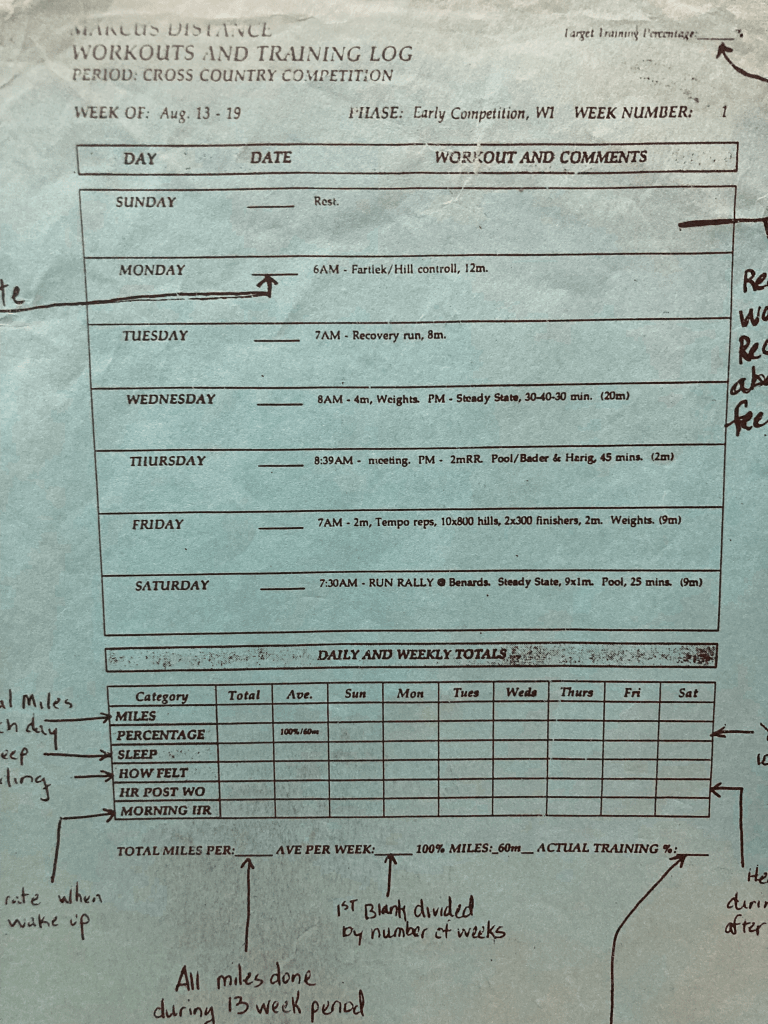
We track our summer training on a google document. I know many teams use training logs and record their mileage in a notebook. We did this as well when I was a runner at Marcus High School. Our coach Steve Telaneus did an amazing job of focusing on the details and it showed in our training logs.

Marcus Cross Country Training Log– 1997

Flower Mound Cross Country Training Log- 2023

While our training logs may have different formats, most of our training remains the same. Usual tempos/progressive runs, strides, hills, and of course recovery/distance runs. No matter the training I think the teams that are most successful in the fall are the teams that were the most consistent in the summer.

Good luck to all teams this fall and I hope everyone has a great summer!

Steve Telaneus: Developing a Successful Cross Country Program: The Complete Guide from A to Z

Ninth Qualifier

Texas has an interesting qualifying process for the UIL State Track and Field Meet. We have six classifications that are based upon school population. Flower Mound High School where I coach is in the largest classification called 6A. We have 3700 students and to most people from smaller towns we look more like a college campus instead of a high school.

The Flower Mound Jaguar Athletic Center

Athletes who advance to state must go though the following qualification process

District- Top 4 athletes and Top 4 Relays advance to the Area Meet

Area- Top 4 athletes and Top 4 Relays advance to the Region Meet

Region- Top 2 athletes and Top 2 Relays advance to the State Meet

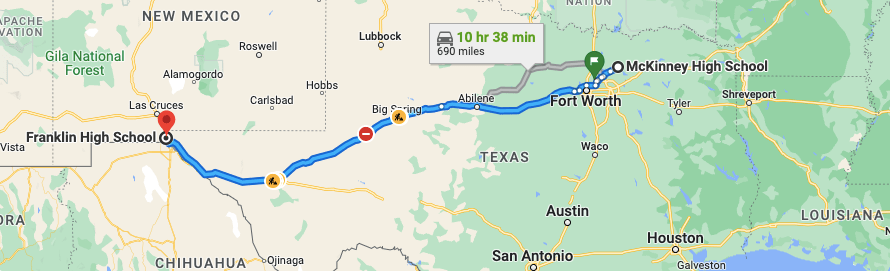
Flower Mound is in Region 1-6A. We compete against teams that are primarily located north of the DFW metroplex and west all the way to El Paso. The distance from the westernmost El Paso Franklin High School to the easternmost McKinney High School is 690 miles. From this massive Region 1-6A we only take two athletes and two relay teams in each event to the state meet.

Region 1-6A

In 2011 the UIL decided to expand the state meet by adding a ninth qualifier. From the four regions in Texas there would now be a “wild card”. From the UIL Track and Field Plan “This qualifier will be the individual and/or relay team with the best overall time, mark, or height from all regional meets per classification that did not finish first or second”

The state meet is at the University of Texas and the track does have nine lanes for the ninth qualifier. We have been fortunate enough to take advantage of the ninth qualifier several times and especially in the distance events. Last year using the ninth qualifier we were able to have three athletes in the 1600 and 3200. That extra qualifier helped us to win the 2022 State Championship.

One big downside to the ninth qualifier process is the difference in weather between the regions. For example Region 2-6A in Waco this past week had a 6.4 m/s tailwind. This obviously was a big advantage for the sprinters and a big disadvantage for anyone running more than one turn.

Still brutal to not qualify to state with a 10.37!!

At the Region 1-6A Championships there was talk amongst the coaches about adding more qualifiers to the state meet. After over ten years of the ninth qualifier coaches are more vocal about asking the UIL (University Interscholastic League) to add more qualifiers. Each year there are regions that are stronger than others in a particular event and a top athlete does not advance to the state meet.

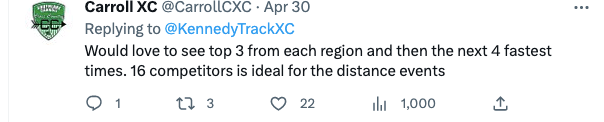
From the twitter world

The tweets above are focused on the distance events. I think it would make sense to increase the field size for all events to 16 athletes. This would require prelims and finals for the sprints and relays. The main problem with this idea is how to schedule all of these races. Right now the Texas state meet spans three days from Thursday to Saturday. If we doubled the number of participants how would the UIL adjust the schedule. Do we start the meet on Monday? Three classifications 1A, 3A, 5A, one week and 2A, 4A, 6A, the next week? Not sure if the University of Texas would be excited about hosting the meet twice or for one week. Maybe we should look at going to two separate locations?

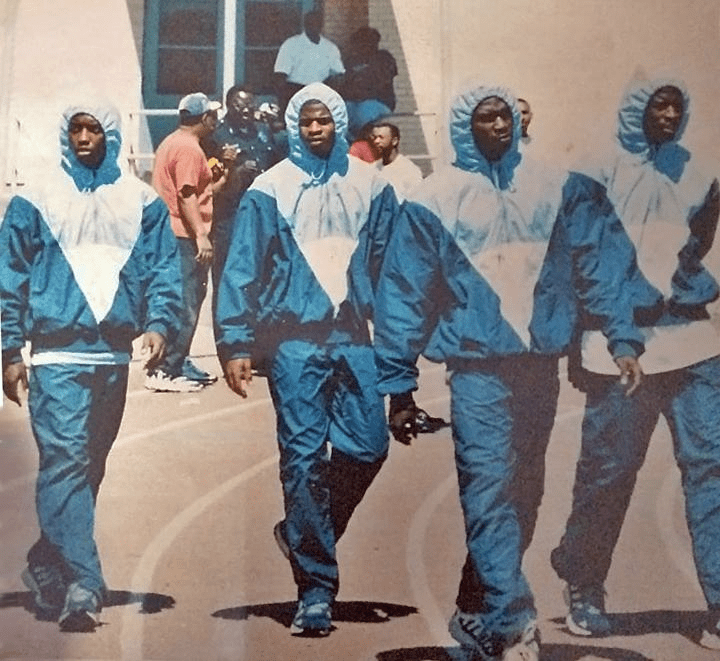
Many questions need to be asked, and it’s not as simple as just saying, ‘Let’s increase the size of the fields.’ Texas also has a great history of track and field and is slow to make changes. This state has produced athletes like Michael Carter and record-breaking relays like O.D. Wyatt. With a rich history of track and field success, including multiple Olympic gold medalists and world record holders, Texas remains a dominant force in the sport and continues to produce some of the best athletes in the country. There are many who believe things should stay the same and if the ultimate goal is to declare a state champion, then the meet is perfect.

Great O.D. Wyatt story by Dave Devine

One-Time
Monthly
Yearly

Make a one-time donation

Make a monthly donation

Make a yearly donation

Choose an amount

¤2.00
¤5.00
¤10.00
¤5.00
¤10.00
¤20.00
¤10.00
¤20.00
¤40.00

Or enter a custom amount

¤

Your contribution is appreciated.

Your contribution is appreciated.

Your contribution is appreciated.

DonateDonate monthlyDonate yearly

Fastest 5k Race in Texas History

The 2016 cross country season was historic for Texas High School Boys. Reed Brown of Southlake TX was the Footlocker National Champion surging away from the lead pack in the final half mile of the race. His victory was the first for any Texas athlete since Reuben Reina in 1985.

Reed Brown 2016 Footlocker National Champion

Reed was not the only Texas athlete at the front of the national championship races. Sophomore sensation Alex Maier of Flower Mound coached by myself placed fifth overall at Nike Cross Nationals and at Footlocker Nationals. Daniel Bernal of El Paso Eastwood finished not too far behind in 10th at Nike Cross Nationals.

Interesting enough none of the three boys were state champions in 2016. Using his superior speed to kick away from the competition on the slight uphill to a state championship was Sam Worley of New Braunfels. Sam placed second at Nike Cross Nationals and ninth at Footlocker Nationals. A great cross country season for any athlete and especially one considered by many to be a mid distance runner.

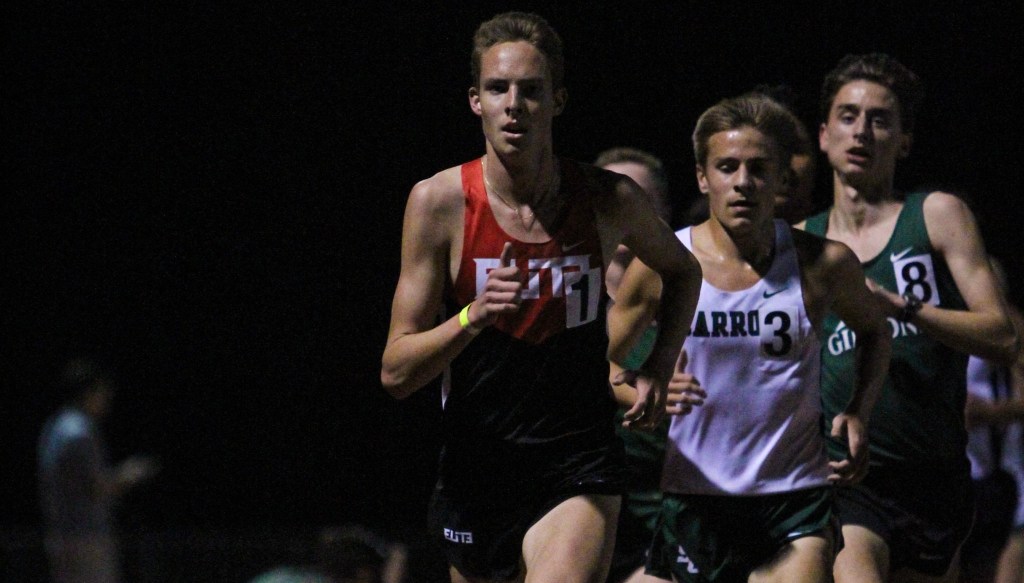
With the cross season over in the fall there was excitement for what that would happen on the track in the spring. Setting the stage for a big show down was the Texas Distance Festival in Southlake TX. In previous years the highlight of the meet was the ELITE 5k. This year would be no different with a star lineup that included…

Cooper Teare: California Cross Country State Champion (DIV V), 16th at Nike Cross Nationals

HS PR’S: 1600-3:59, 3200- 8:41

Connor Lane: North Carolina Cross Country State Champion, 8th at Footlocker Nationals

HS PR’S: MILE- 4:10, 3200- 8:47

Noah Affolder: Pennsylvania Cross Country State Champion, 6th at Footlocker Nationals

HS PR’s: 1600- 4:07, 3200- 8:47

Seth Hirsch: Nebraska Cross Country State Champion, 3rd at Footlocker Nationals

HS PR’s: 1600- 4:14, 2 MILES- 8:55

Alex Maier: Texas Cross Country State Runner Up (6A), 5th at both Footlocker and Nike Cross Nationals

HS PR’s: 1600- 4:09, 3200- 8:52

Daniel Viegra: 22nd at Footlocker Nationals

HS PR’s: 1600- 4:06, 3200- 8:59

Daniel Bernal: Placed third at Texas State Cross Country (6A), 10th at Nike Cross Country Nationals

HS PR’s: 1600- 4:15, 3200- 8:54

Luis Grijalva: California Cross Country State Champion (DIV I), 13th at Footlocker Nationals

HS PR’s: MILE- 4:02, 2 MILE- 8:46

Reed Brown: Placed fourth at Texas State Cross Country (6A), Footlocker Champion

HS PR’s: MILE 3:57, 3200- 8:51

With a great field assembled I didn’t have much to say to our Flower Mound athlete Alex Maier before the race. Basically it was something along the lines of get out fast and hang on. He had a big breakout season in the fall going from an unknown athlete to competing with the best runners in the country. During that time we talked very little about the competition and instead focused on running towards the front and finishing hard over the final mile of each race.

On a calm cool night and with nothing to lose the race started out fast with 12 boys going through the first mile in 4:32. At the time I thought this was entirely too fast. These were only high school boys and surely they were going to fade over the second half of the race. They did however look surprisingly smooth and these were the best high school runners in the country…maybe some of them could hold on for something special?

Keeping the pace consistent the pack passed through 3200 meters in 9:08. A slight slow down, but 10 boys! were still on pace for a sub 14:20 5k. Alex was at the very back of the pack and I was shouting at him to hang on and maintain contact. As you can see from the video the track was lined with spectators and at this point there was plenty of yelling/cheering going on to encourage the athletes in the toughest part of the race.

With a kilometer to go Connor Lane, Noah Affolder, and Cooper Teare pulled away from the pack in a bid to win. Cooper Teare made his decisive move with 600 meters to go to take the lead. Cooper ran his last 400 meters in 62 seconds to win convincingly in 14:13. Alex Maier closed well over the last mile to place fifth in 14:25, a Texas high school record.

It was tough to pick out the rest of the top finishers from the lapped runners. I had to go look at the results to fully appreciate what had just happened. The race redefined what high school athletes were capable of achieving and I think helped them gain confidence to do great things the rest of the season.

Mileage Matters

A few weeks ago, marathoner Cam Levins achieved a breakthrough performance at the Tokyo Marathon, setting a North American record with a time of 2:05:37. Despite coming in fifth place, it was still an impressive feat. Levins is known for running more than his competitors, and he attributed his success to running three times a day and covering over 170 miles each week, along with strength training and daily mobility exercises.

As a high school coach, I often wonder how much to push my athletes. How many miles should they run per week to qualify for state championships? I obviously don’t want them to run as much as Cam Levins! Based on my experience, a team that averages 60-minute runs for boys and 45-minute runs for girls, along with strides three times a week, can be competitive and potentially make it to the top 10 at the state level.

In 2018, we had one of the best boys’ teams that placed third at the Texas UIL State Meet, with our top runner being the individual state champion. Looking back, I often wonder why we can’t easily replicate that success. But, it’s important to remember that it’s challenging for some athletes to run that kind of mileage, and it requires not just motivation but also muscular strength and consistency. It’s worth noting that our athletes had years of training under their belts, and many started running competitively in middle school.

Below is what the 2018 team ran for their 10 weeks over the summer. Most weeks consisted of one long run, 5 distance runs, and a tempo or pick up run (last 2-3 miles fast). In addition to those workouts they ran strides or hill sprints two to three times a week.

I left the names off the list, but I’ll let you guess who was at the top of the summer training log and what he placed at the state meet.

2018 Summer Mileage Chart

Here is a guideline that we follow for mileage progression. Other factors to consider before increasing mileage are their health, current performances, and as previously mentioned their motivation.

Mileage Progression for Girls

Freshman- 15-25 mpw

Sophomores- 25-35 mpw

Juniors- **35-45

**This seems to be the sweet spot for many of our athletes. We have very few girls that run over 45 miles a week on our team.

Seniors- 45 plus miles a week

Mileage Progression for Boys

Freshman- 25-35 mpw

Sophomores- 35-50 mpw

Juniors- 50-65 mpw

Seniors- 65-80 mpw

What about cross training?

I get this question a lot since we have had some athletes who have been successful with cross training. I know many athletes struggle with running more miles, and cross-training can help them improve their fitness and avoid injuries. Cross training isn’t some easy shortcut and requires a greater time commitment. Some athletes struggle with cross-training and are either unable or unwilling to push hard enough to benefit their aerobic fitness. In the future I’ll put together a post on cross training and running or post it on gumroad for sale.

In conclusion, the title of this post rings true: mileage matters. The teams that tend to win or qualify for state championships are usually the ones that work the hardest. As coaches, it’s easy to make excuses, but it’s crucial to stress the importance of hard work and motivate our athletes to achieve their individual and team goals.

Support txrunningcoach.com

Choose an amount

¤5.00
¤15.00
¤100.00

Or enter a custom amount

¤

Your contribution is appreciated.

Donate

Tired of GPS Watches

When I first started running, the watch of choice was the Timex Ironman Watch. Even though we weren’t Ironman triathletes, we appreciated the simplicity and durability of this watch. The watch had a chrono mode, took splits, was water-proof, and even had a special Indiglo feature that allowed you to see it in the dark. For high school athletes, we also found that it was pretty much indestructible. I know the battery had some sort of lifespan, but we never saw one that died. What a watch, and it was fairly inexpensive!

Timex Ironman Classic 30, AKA The best running watch ever still available on Amazon.

When I first started coaching high school athletes, the GPS watches were bulky and looked more like someone had an old-school iPod attached to their wrist. They were also expensive, so very few athletes owned these watches. I didn’t own one and thought they looked ridiculous.

Nothing beats strapping a brick to your wrist before a run.

In 2008, our booster club purchased five Garmin watches, which I assigned to each of our running packs. It was a good way to check their distance and pace as they ran around Flower Mound. The kids hated the bulky watches and thought I didn’t trust them while running on their own. That may have been true for some of our more mischievous runners, but for the most part, I was interested in the data. For a long time, we were in the dark about the exact distance of a loop and the pace of our runs. We had a rough estimate, but I didn’t take my car out and measure all these running loops.

This new data was interesting to look at, and I felt it gave me another opportunity to coach up our kids. Run too slowly? I was ready to inform them on the importance of being consistent in their work ethic. Have you been running too fast? I was ready to tell them how important it was to be patient and recover on easy runs. It’s easy to see why, after a while, the kids grew tired of wearing these watches. The watches and their coach were taking the fun out of running.

I had to remind myself that kids are not robots. They are going to have days when they need to run slower and days when they want to run faster. Other factors such as heat, cold, wind, and hills should also be taken into account when looking at their pace for the day. Like many things, the GPS watch is a tool that, when used correctly, can help athletes improve.

And now getting to the title of the article, here are five reasons I’m tired of GPS watches.

  1. Cross Country: I’m not a fan of obsessing over distances in cross country. The distance for 6A in Texas is supposed to be approximately 5 kilometers. Many kids wear their GPS watches in races, and the biggest complaint I get afterwards is that the course was too long. I almost never hear about a course being too short!I just don’t care and still think cross country should be focused on placing. This past weekend was the World Cross Country Championships in Australia. The best runners in the world competed in this race, and I didn’t hear one thing about their finishing times. I do know which individuals and teams won the races.
  2. Battery: If an athlete has trouble keeping their iPad charged for school, I can guarantee their running watch is going to be dead for practice. Of course, their phone always seems to be charged at 100 percent. It’s hard to get any information from a blank screen.
  3. Functionality: When on the track, our athletes have trouble getting splits. They can tell you how far it is around a 400-meter track or how many steps they have taken for the day, but they have no idea what their time was on a repetition. This is where the previously mentioned Timex watch from 30 years ago outshines the new GPS watches.
  4. Obsession: We have athletes that obsess over every little detail. They look at their watch constantly and adjust their paces by slowing or picking up the pace throughout the run. I had to tell our team a few years ago that they were supposed to run slower on the hills and faster on the downhills. Our girls’ packs were surging up the hills and then plodding down the hills to maintain the exact pace. I’m also not a fan of the built-in heart rate monitors. They seem to be inconsistent, and it’s another thing that our athletes can stress over.
  5. Not Robots: As I briefly mentioned earlier, athletes are not robots, and they shouldn’t stress over a watch. It’s important that they listen to their bodies and run faster or slower depending on how they feel. I also want them to enjoy being runners and what running has to offer. Look around and enjoy being outside and hanging out with teammates.

One-Time
Monthly
Yearly

Make a one-time donation

Make a monthly donation

Make a yearly donation

Choose an amount

¤5.00
¤15.00
¤100.00
¤5.00
¤15.00
¤100.00
¤5.00
¤15.00
¤100.00

Or enter a custom amount

¤

Your contribution is appreciated.

Your contribution is appreciated.

Your contribution is appreciated.

DonateDonate monthlyDonate yearly

Sleep and Performance

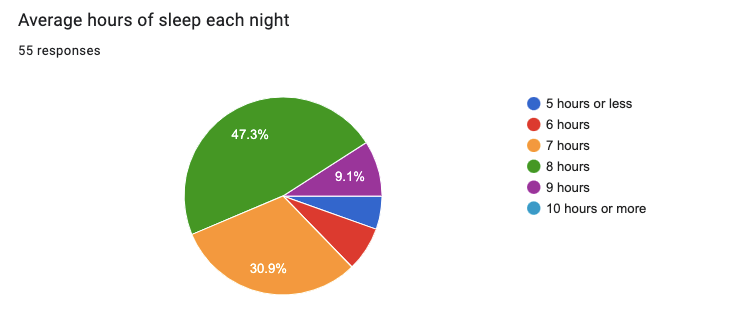
Each winter, I have my athletes fill out a goal sheet on Google Forms. I love meeting with the kids and discussing their goals and what they want to achieve in the new year. The goal-setting form includes a question about how many hours of sleep they average each night. I was pleased to see that over 60% of our team gets 8 hours or more of sleep. These are active teenagers, and I know they will be able to recover faster and feel better for their workouts and classes.

However, I am concerned about the kids who get 7 hours of sleep or less. We start practice at 7:30 AM each morning, and they must be going to bed at 11:30 PM or later each night. Most of them mentioned that the reason for less sleep was due to their AP classes or working late at night.

During a team meeting, I asked the team what three things they could do to get more sleep:

  1. Go to bed earlier: I laughed at this simple answer, but they were correct. Some of the kids admitted to staying up late because of social media or television/YouTube. These distractions can be a big reason for why kids are getting less sleep. I told them not to stay up late for anything they wouldn’t wake up early for. For example, would they wake up an hour early to check their Instagram?
  2. Prioritize: We discussed the importance of prioritizing and getting the most important things done first. Avoid procrastination and start homework as soon as possible. Don’t wait until 8:00 PM and then find yourself staying up late trying to complete a surprisingly difficult assignment. If they know they have a lengthy assignment, don’t procrastinate and wait until the last day to get started.
  3. Organize: One student mentioned how he plans out his day. He makes sure to prepare for the day ahead in advance, so he doesn’t have to wake up early to make his lunch or get his school clothes ready. With his work schedule, he has some flexibility and avoids staying up late to make sure he gets enough sleep on weekdays.

The chart below shows how athletes who get less than 8 hours of sleep greatly increase their chances of becoming injured. I find it interesting that the study shows that athletes who get 5 hours of sleep are less likely to get hurt than athletes who get 6 hours of sleep. When I showed this chart to our team a few years ago, one kid thought he should go from 6 to 5 hours instead of 6 to 7 hours! After looking at this chart, I’m going to start encouraging our kids to get 9 hours of sleep if possible. For our team, that would mean going to bed at 9:45 PM and waking up at 6:45 AM, which seems reasonable for many of them.

I have been guilty of being too focused on things like hard workouts, strength training, what they eat for breakfast, and haven’t stressed the importance of sleep. As coaches, we don’t hear ourselves talking on Twitter about how our team all got 8 hours of sleep! We are usually excited about sharing some great track workout or new drill. Maybe the key to a breakout season is more sleep and not more miles.

Prepare To Win

Juma Ikangaa is a marathon runner from Tanzania who won the New York City Marathon and placed second overall at the Boston Marathon. After he won the NYC marathon he said “The will to win means nothing without the will to prepare.” I have always liked this quote because it stresses the importance of training/having a good work ethic. Many athletes want to win on race day, but only the athletes who put in the work have a chance to be successful. 

  • Around ten years ago, I came up with the idea of wristbands for the team. I wanted us to have a motto to focus on, to give us motivation when we trained. I couldn’t fit the whole “will to win” quote on the wristband, so I shortened it to “PREPARE TO WIN.” We’ve had different color wristbands over the years, navy, white, silver, gray, but it’s always said the same, “PREPARE TO WIN.” The kids enjoy collecting the wristbands and like to ask for an extra one to put on their water bottles. When our team wears the wristband, we seem united. Maybe we aren’t capable of winning a state championship, but at least we are focused on becoming better. For me, there has always been comfort in seeing a bunch of our kids work hard together towards a common goal
  • I have been fortunate enough to speak at a few coaching clinics. Most of the coaches look at me funny when I tell them that a big reason for our success is the wristbands. They are looking for some secret workout or race strategy we implement, but instead of hearing about those things, they mostly hear about PREPARE TO WIN. I stress the importance of this because if athletes aren’t motivated to do the workouts, then what difference does it make? What does it matter if we do 10×400 or 4×1 mile if the athletes don’t see the point?

  • As coaches, we try to emphasize the importance of the process and to reward athletes for their consistency in our practices. We had a student recently complete our LRC (long run challenge) for the past five weeks, despite the bad weather. I made sure to acknowledge his dedication and consistency in our morning team meeting, and expressed how proud we are of his hard work. Although we have had athletes run the LRC faster, none have completed the run for five consecutive weeks.
  • Motivation is a constant battle, and I won’t pretend that it has always been easy in our program. Although we have a great group of athletes, even the most driven among them need encouragement and a pat on the back. Before each practice, we have a team meeting, and I use that opportunity to greet the team in a positive manner and to encourage them for the day’s workout. We also use the meeting to discuss things such as team culture, 5 keys to success (see previous blog post) and other random things related to running like safety on the roads.