NXR South Championships

After our state meet in Texas we had three weeks till the NXN South Region race. When you have a race that requires all of your physical and emotional energy I feel it’s important to be careful the following week. We kept our mileage consistent, but dialed down the intensity. The one workout we had was a 3-2-1 fartlek on the grass for 30 minutes. We usually are more structured in our workouts, but I felt it was important to let our athletes go more by feel. The three and two minute repetitions around tempo pace and the 1 minute repetitions close to 5k race pace. In between the repetitions a 1 minute easy jog to allow adequate recovery. In addition to the one fartlek workout we also had a medium long run on a hilly route in Flower Mound.

Westchester Park in Flower Mound. Only grass park we have within couple miles of Flower Mound High School

The next two weeks we returned to our usual cruise intervals on grass at our local park. We do something similar to what is listed below throughout the season.

Girls

Workout A: 1 mile warm up, 400 meters fast, 6-7xkm @ tempo pace, 400 meters fast, 1 mile cool down

Workout B: 1 mile warm up, 600 meters fast, 5-6×1200, 200 meters fast, 1 mile cool down

Boys

Workout A: 2 mile warm up, 600 meters fast, 8-10xkm @ tempo pace, 400 meters fast, 2 mile cool down

Workout B: 2 mile warm up, 600 meters fast, 7-8×1200, 400 meters fast, 2 mile cool down

We also had two track workouts that we focused on running at our a little faster than 5k pace

Girls and Boys Track Workout leading up to NXN South

Workout on the track: warm up, 2 (2×400, 1600), cool down. Recovery was 200 meter jog between 400’s and 3 minute standing rest after the 400’s and 3 minute rest after the 1600’s.

Our top girl athlete ran the workout in 5:26, 69, 71, 5:14, 70, 69.

One of our girl pack runners (6-10 on team) ran the workout in 5:56, 76,81, 5:59, 80, 78

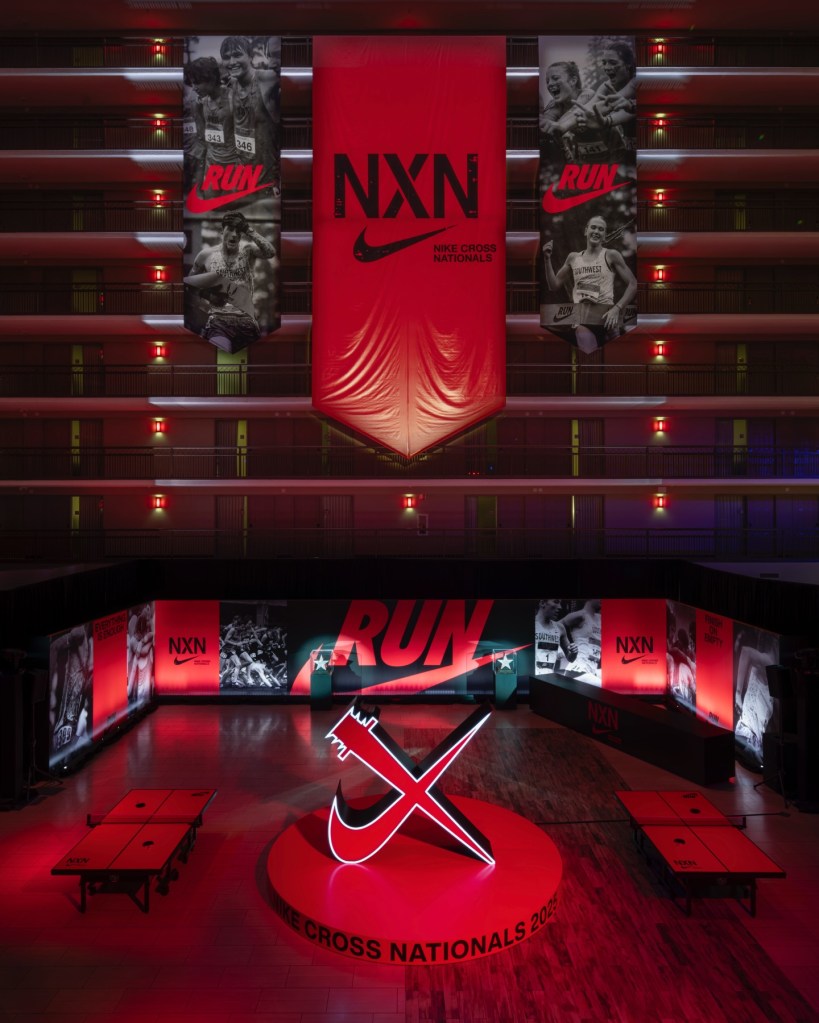
NXN South Region at Texas A&M University

The NXN South Region race had previously been held at Bear Branch Park in The Woodlands. The course was known for being narrow and when it rained very muddy. We had mixed results at Bear Branch Park and some years when it was muddy it felt like whoever could sprint the fastest the first 600 meters had a good chance of going to NXN.

As participation continued to grow, the event required a new venue to accommodate runners and spectators. The Texas A&M course meets the requirements to not only host a large high school invitational meet, but also NCAA Championship races. The starting line is almost 100 meter wide to comfortably handle 30 teams and individual athletes. The course begins with an 800 meter wide straight that allows athletes to safely merge before the first turn. The rest of the course remains wide, includes rolling hills, and finishes with an 800 meter straightaway. I think this course is a big improvement over Bear Branch and I like that high school kids have the opportunity to race on a collegiate level course.

Middle mile at Dale Watts Texas A&M Cross Country Course


Flower Mound Girls NXR South Race

Going into this race I tried to make sure we stayed sharp and fresh after a long cross country season. Our girls were disappointed by a second place finish at state and we tried to use that as motivation going into the NXR South Race. I felt if we could hammer up front and run as a team we would have a good chance of qualifying again this year.

The start of the race was moved to 7 AM to avoid thunderstorms that were predicted to roll into College Station by noon. We have had early starts to beat the heat before, but 7AM in November felt very early. I looked at the weather app on my phone and it said the sun wouldn’t even rise till 7:10 AM. The race was recorded on milesplit and it’s hard to even pick out the runners the first couple miles because it was still dark.

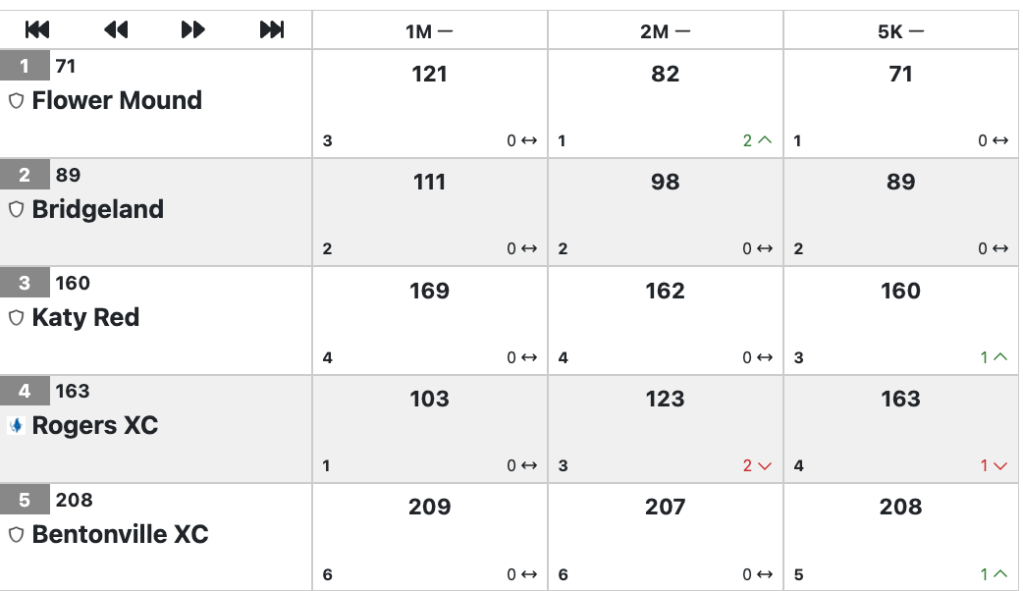
The race did start exactly at 7AM and I stood close to the kilometer mark awaiting our team. We looked like we had a good start, but it was tough to tell with many of the teams wearing different club uniforms. When the score populated for the first mile we were in third place with 121 points. From looking at the other regions and national rankings I thought we would have to place in the top two to earn at spot to NXN. I wasn’t ready to panic at this point and felt there was still plenty of time to move up, especially with the rolling hills in the second and third miles.

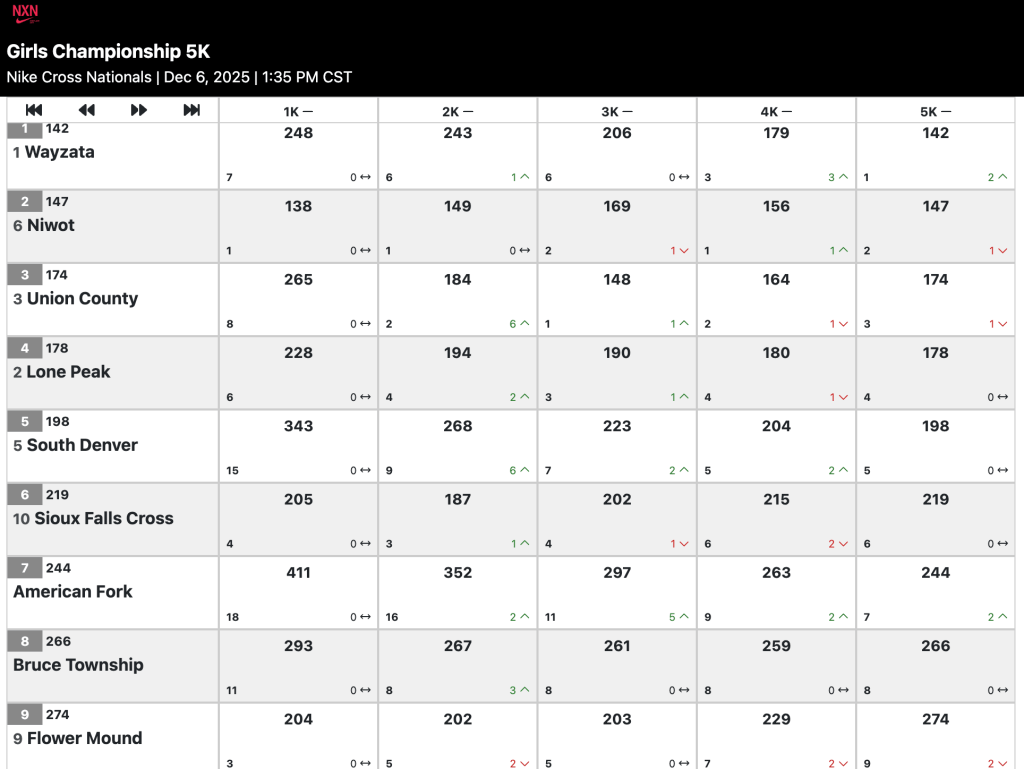
Split scores for NXR South

We ran great in the second mile with our front three runners all in the top 20 for team scoring. Our fourth runner moved from 36th to 28th place and our fifth runner moved from 57th to 33rd. We were now in first place and I felt like we had a great chance of advancing to NXN, but still wanted us to finish better than we had at state.

I ran to the finishing straight which is almost 800 meters long to cheer on our runners. It’s pretty brutal to see the finish banner and still know you have 2-3 minutes of the race remaining. Our girls looked to be holding their positions or passing other runners. When the scores originally populated it showed that we finished second. I was disappointed to see that we had come up short again after leading at the two mile mark. When I looked closer at the results I noticed that our number one runner was missing. I sprinted to finish line and was worried that she was hurt or maybe had passed out from the effort and was unable to finish. When I got to the finish line she informed me that she did more than just finish and had passed a couple runners to finish in eight overall and first in the team scoring.

Fortunately the results were fixed quickly and when they added our number one runner in the results we had won with 71 points. A very low score for a meet with 33 teams and great competition.

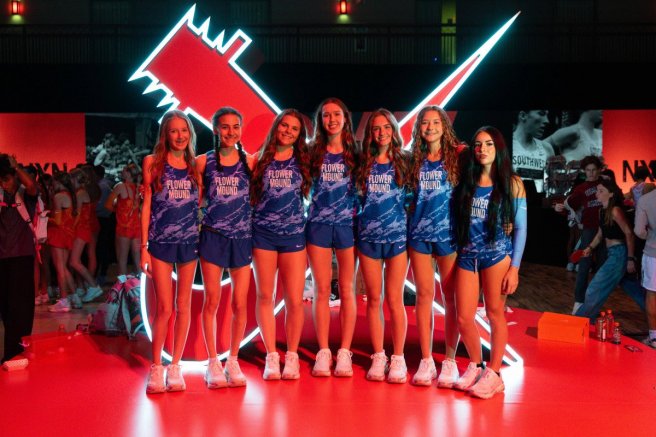
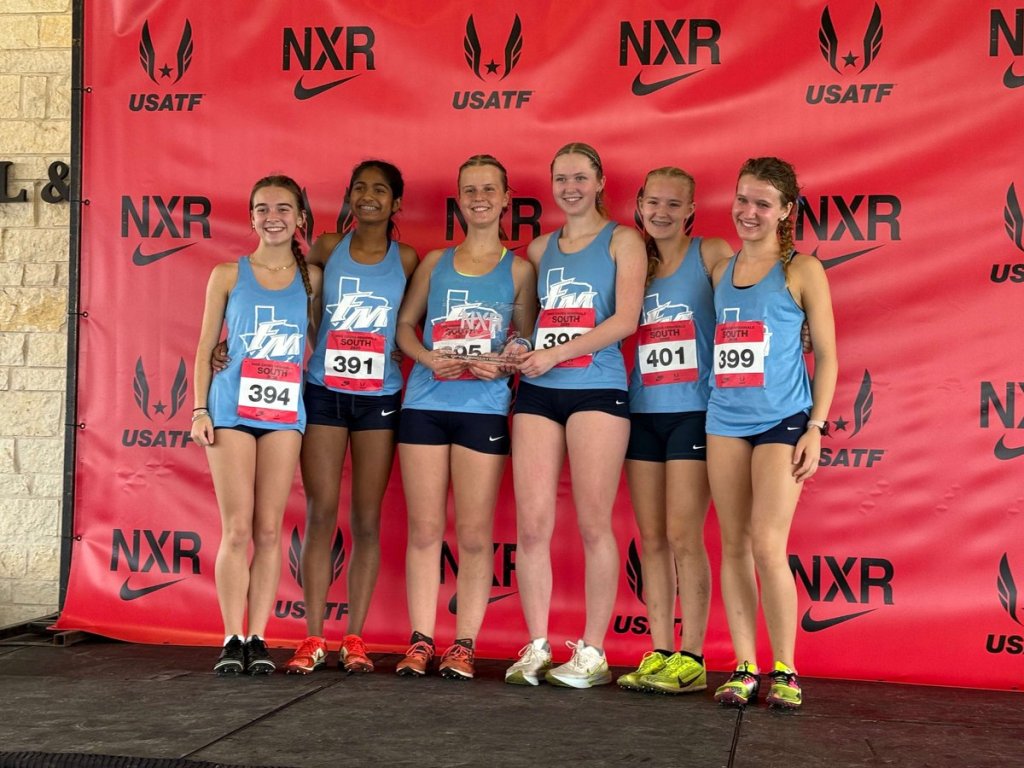
NXR South Winners

I also want to add I’m very proud of the way our JV girls competed in the open race to place first. They worked hard all year and put in a great performance after not racing since mid October.

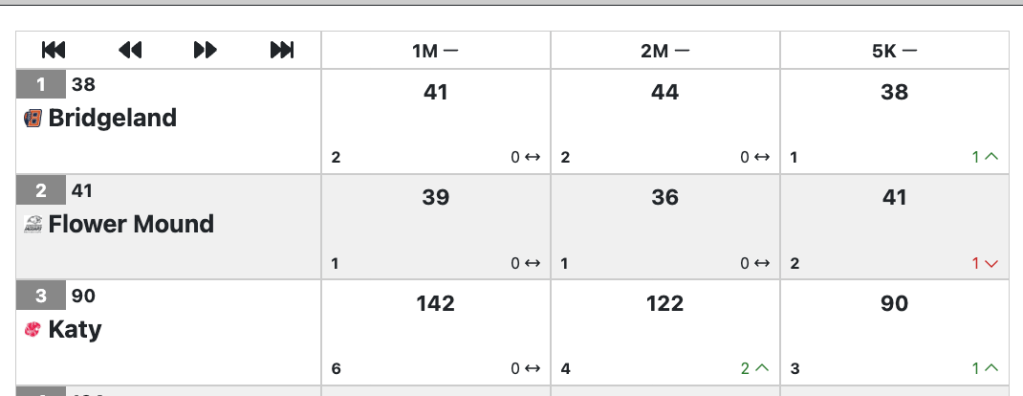
NXR Open Championship Winners

I’m on a roll with two posts in one week! I’ll try my best to get another post in soon on the Nike Cross Nationals experience.

One-Time
Monthly
Yearly

Make a one-time donation

Make a monthly donation

Make a yearly donation

Choose an amount

$5.00
$10.00
$20.00
$5.00
$15.00
$100.00
$5.00
$15.00
$100.00

Or enter a custom amount

$

Your contribution is appreciated.

Your contribution is appreciated.

Your contribution is appreciated.

DonateDonate monthlyDonate yearly

Thoughts on the Texas UIL State Cross Country Meet

This year marked the 30th year the UIL has hosted the Texas State Cross Country meet at Old Settlers Park. Our team had hopes of continuing our state run and going for a sixth consecutive state championship. We unfortunately came up three points short to a great Bridgeland girls cross country team. My thoughts are below on the state meet course and the Flower Mound girls team race at state.

OLD SETTLERS PARK COURSE (1996-2025)

THE START

The start is significantly better now with almost 600 meters before the first turn. I would like to see the UIL widen the start line and use the full width of the available field. There was a point we could line up 7 runners on the starting line and now we are able to line up 4-5 athletes. With that said the start line used to be on a sidewalk, not fun if you are wearing spikes. The first turn was also only 200 meters after the start and usually had a significant number of rocks to trip up runners.

State meet course from 2013. Short distance to first turn and narrow!

COURSE WIDTH

If people are asking why athletes in Texas like to get out fast, maybe the old state course is partially to blame. Besides the short distance to the first turn the rest of the course was very narrow. Good luck passing runners when you could only run three wide for significant portions of the race. There were also zero barriers and that allowed spectators to press in on the athletes an make the course even more narrow especially as they approached the finish.

The course is now significantly wider and athletes are able to pass other runners when able. The UIL has also increased the number of barriers for athlete safety. It is now difficult for an overzealous parent or coach to impeded athletes by stepping onto the course. The barriers clearly help mark the course and keep spectators a safe distance away from the runners.

FINISH

The finishing straight is approximately 200 meters and the UIL has added seating for the spectators. Not everyone can run or walk around the course and it’s great their is an option for people to watch the start and finish from the same area. The finish wasn’t bad when the course was first used, but there was no seating and it was hard to get a good viewpoint of the runners.

Current state meet course. Better for athletes and spectators

STRIVING FOR A SIXTH STRAIGHT CHAMPIONSHIP

Winning is hard and repeating is harder. Many teams and individuals each year have the same goal of being a state champion. I doubt a team that has placed second or third the year prior has written down on their goal sheet “Geez I sure would like to get on the podium again!” Of course they probably would like to ascend to the top of podium and hold up that first place trophy.

We have continued to win by being focused on preparation and consistency. Our team motto is “prepare to win” based upon the quote by Juma Ikangaa “The will to win is nothing without the will to prepare.” Throughout the year I thought we did a great job of having good workouts and having a positive team culture.

Going into the state meet I thought it would be a close race between ourselves and Bridgeland. They had a great track season the previous spring and were unbeaten against teams in Texas. With a strong front three runners and a great pack it reminded me of some teams that we had at Flower Mound in the past. Our team this year has had two to three front runners and our pack has shown hints of greatness, but also inconsistency over the course of the year.

Before the race I focused our team on having a good start and running well in the middle mile. The middle mile is the most difficult and is a great opportunity to stay focused and pass runners. I also wanted our girls to run as a team and push each other throughout the race. I don’t like to focus on any one team or individual, but made it a point that the Bridgeland girls would be the biggest threat.

During the race we had a decent start, but Bridgeland set themselves up better with three runners in the top seven. Even though we had a two point lead at the mile mark, I think having three athletes in the top 10 allows a team to run more freely. We followed our race plan the second mile and did a great job of maintaining or passing runners. I was running around the best I could encouraging our athletes while trying not to run into other coaches and spectators.

Going into the last mile we had an eight point lead. I thought we were in great position but we had to finish the race and especially the last kilometer. The Bridgeland girls began to pass runners and I noticed that we were maintaining or losing spots. Not what you want to see! Unfortunately when the scores came in I knew that we had already lost.

Once I had time to calm down and analyze the results I thought we ran a great race and competed very well. In fact I think it was our best team race of the season. I haven’t checked results from every state meet in history, but feel confident we scored the lowest second place total in Texas 6A cross country history. Proud of our girls team for how they competed and all the hard work they put into to help us continue to be one of the top teams in Texas.

I’ll have another post soon on the NXN experience and may also add another post on what a typical training week looks like for an NXN qualifying team.

Choosing Spin Bikes and Ellipticals for Your Cross Country Team

About 15 years ago, we started purchasing spin bikes and ellipticals for our cross country team. Initially, we bought three spin bikes primarily for injured athletes who needed a low-impact training option. It wasn’t until a few years later that we began using cross training as a way to add more aerobic volume to our overall program.

In the beginning, I struggled to find the right equipment something that was affordable, durable, and challenging enough for our athletes. After a lot of trial and error, here’s what I’ve learned about what to look for when buying spin bikes and ellipticals.

FMHS BIKE ROOM


What to Look for in a Spin Bike

There’s a wide range of spin bikes available on Amazon and elsewhere, so it’s important to know what features matter most. Here’s what I typically look for when purchasing a spin bike:

  • Adjustable seat and handlebars: Make sure the bike can accommodate both shorter and taller athletes. Proper fit is key for comfort and safety.
  • Flywheel weight of at least 40 lbs: A heavier flywheel usually means better durability and a smoother ride.
  • Chain-driven system: While many people prefer belt-driven bikes for their quiet operation, I’ve found that chain-driven bikes feel more like riding a real bicycle.
  • Comfortable seat: Since our runners don’t wear padded cycling shorts, the bike seat should have some built-in cushioning.
  • Caged pedals: These allow athletes to stand and pedal out of the saddle safely and easily.

Things I don’t consider essential: a fancy display or a mount for an iPad or phone. Most of our athletes aren’t focused on data like watts or cadence. Instead, we emphasize effort and heart rate.

The spin bike we’ve most recently purchased is from Sunny Health & Fitness for around $249. You can find solid, durable spin bikes for under $300, which is great for team budgets.

👉 Spin Bike on Amazon


What to Look for in an Elliptical

Ellipticals are a tougher purchase. You have to be careful not to buy the cheaper models they often won’t last more than a year, especially with every day team use. Assembly is also critical; even one loose screw can cause squeaking or instability.

Here’s what I recommend looking for:

  • 20-inch stride length: This stride length feels the most natural for runners and fits a wide range of athletes. It also provides a better workout because of the increased range of motion.
  • Variety of resistance and incline options: While I typically have athletes keep the incline low, having multiple settings helps adjust workout intensity and target heart rate. Be careful with some ellipticals that may be too d
  • Ease of use: The best ellipticals power on as soon as you start pedaling and have simple, intuitive displays. You shouldn’t have to explain how to use it before every workout. We have close to 100 athletes on our team and I don’t have time to teach every one of them how to use the elliptical.

Some good ellipticals that we have used in the past or currently

ProForm Elliptical

Schwinn 430 Elliptical


Final Thoughts

In closing good luck to everyone with the rest of your cross country season. Sorry I haven’t posted as much in the past few months. If you have any questions concerning cross training equipment or cross training in general you can respond to this post or shoot me an email. Also if you would like to learn more about how we use cross training in our program a presentation is available below.

Cross Training for Distance Runners

Peak Performance

This summer I’m trying to read one book a week and improve my chess game (chess is not going well!). I’ve read Peak Performance by Brad Stulberg and Steve Magness before, but it’s been a while, and I felt it would be good to reread it.

Here are my notes from the book:

Mental Fatigue Can Hurt Physical Performance

The authors discuss the importance of simplifying our lives and placing mental focus on what matters most. We may not realize it, but small decisions throughout the day can accumulate and contribute to mental fatigue.

When it comes to running, I believe it’s important for athletes to stay in a routine. Decisions especially on race day should be minimized to help athletes stay stress free. For example, the night before a meet, everything should be laid out and ready for the morning. Athletes shouldn’t be scrambling to find their favorite pair of socks. They should wake up and be ready to go.

They should also have a pre-race routine: knowing when to use the restroom, when and how long to warm up, and exactly what time they want to be “race ready.” Eliminating decisions and sticking to a routine allows athletes to focus on what truly matters which is running at their best.

As a coach, I think it’s just as important that we stay in a routine on meet days. I’ve seen coaches give great motivational speeches before races. If that works for you and your team, it’s important to do it consistently throughout the season.

Early in my coaching career, I made the mistake of changing my approach just because it was the state meet. One year, I told our boys right before the race that it was important to get out fast to avoid an early bottleneck. The advice was fine but the timing was terrible. I normally don’t speak to them right before races, and they looked nervous. We went out fast and, unfortunately, faded in the final mile and missed the podium. Lesson learned: be consistent and stick to the routine even as a coach!


Focus on a Single Task

In Peak Performance, the authors debunk the myth of multitasking. We’re faster and more efficient when we focus on one task at a time. They also emphasize the importance of removing distractions like cell phones when working or studying. Even having a phone in the room can make us feel like we’re missing a message or notification.

I no longer teach in the classroom, but I always felt it was important to have students put their phones away during lectures and discussions.


Growth Mindset

It’s important to believe that ability can be improved. The most successful people show up consistently. I always tell our team that consistency is the key to success. Athletes who show up to practice and give their best effort will, in the long run, see the most improvement.

Another example of a growth mindset is approaching challenges with a positive attitude. Knowing that tough situations like a hilly course or a hard tempo run will ultimately make us better runners helps shift our mindset. We should avoid thinking of these challenges as just hard or painful.


Sleep More

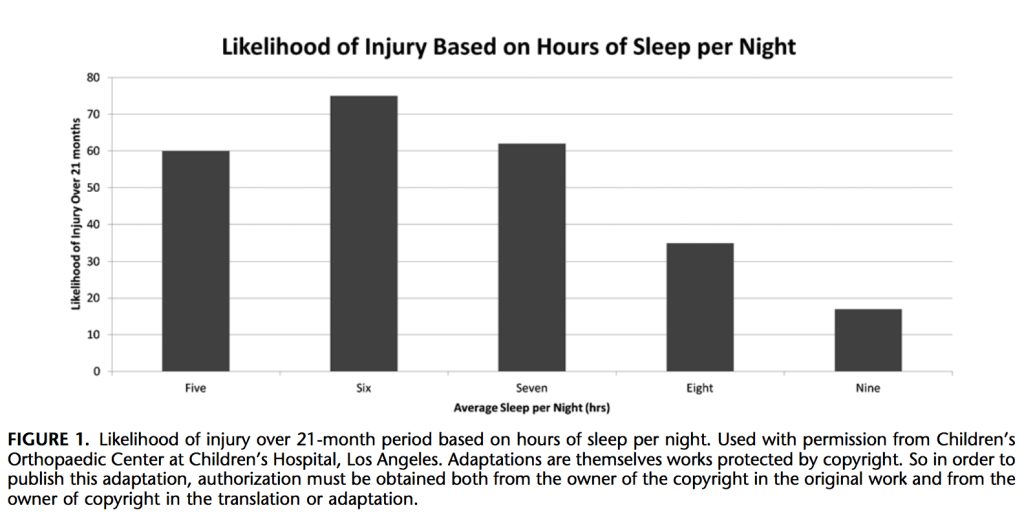
The book also discusses the critical role of sleep in performance. In the 1940s, the average American got 7.9 hours of sleep per night. Today, that number is down to 6.8 hours—much of the blame going to blue light from screens.

Many teams do a great job of working hard, but they fall short when it comes to resting and sleeping enough.

Quick google search came up with this study. Imagine how much healthier all of our teams would be if they could get 8-9 hours of sleep a night!


Having a Purpose

One of my favorite parts of the book is the chapter titled simply Purpose. The authors say, “Having a purpose fuels motivation, resilience, and performance.”

With our runners, I think it’s important they focus on their teammates and look for ways to help each other improve. From my own experience running at Texas A&M, I found that when I focused on pushing my teammates during workouts, I thought less about my own discomfort and instead was motivated by the team’s success.


Motivation

Perceived effort can actually be lowered through increased motivation. It’s important to remember our goals and why we’re pushing hard in workouts and races. A ten-mile run might feel easier if an athlete is thinking about how it will help them break their goal time of 5 minutes in the mile. Likewise, an athlete may run faster in a race if they know their performance could help their team win a state championship.


Final Thoughts

I thought the book was excellent and appreciated how easy it was to read. While not specifically a book about running, it covered many topics that relate directly to it. I also appreciated its emphasis on overall well-being and how we can live healthier lives.

If you’re interested in purchasing the book, you can do so at the link below:

PEAK PERFORMANCE BY BRAD STULBERG AND STEVE MAGNESS

Morning Meeting

During the school year, we start practice at 7:00 AM, and I try to be at the school by 6:45 AM to let athletes into the building and locker room. Like all schools in Texas, our building is completely locked, and I want to make sure I’m there early enough to give athletes time to put away their things and use the restroom if needed.

Once I’ve opened the locker rooms, I head to our team room, which has two large whiteboards, a projector screen, and around 60 chairs. Our team this past year had over 100 athletes, so about half of the kids have to stand in the back. I’m okay with that and think it reinforces the importance of being on time to practice. On the whiteboard, I write the workout for the day, a motivational quote, and any other important information we need to cover.

On our team, we have seven training groups that range in weekly mileage from 15 miles per week to 65 miles per week.

Most of the time, our whiteboard looks something like what is shown below. Well need to add in the bad handwriting and smear since I’m left handed.

Why you should have a morning meeting

The morning meeting is important to me because it’s a consistent daily routine. Our athletes and coaches know what to expect each morning and it’s one less thing for them to stress about in their day. We can use the morning meeting to assess the energy of the team and prepare them for the workout that is to come that day.

One thing to note, I’m probably different from most coaches in that I don’t spend a lot of time talking. I would say on average I talk around 3-5 minutes. I try and get to the point, make my usual “dad jokes” and then get the athletes out the door for their workout. My coaches in high school and in college were great motivational speakers. I tried to follow in their footsteps, but it just didn’t suit my personality.

And good luck to all athletes and coaches this summer. I always like to say if you want to get better you should run farther or faster than you did last year.

5 Great Winter Workouts

After a two-week Christmas break, we returned to school this past week. Excited to start preparing for the track and field season, I was looking forward to our early workouts. Unfortunately, we have had some inclement weather, and we had to cancel school for the past two days due to snowstorms (well, snow for us in Texas). Now comes the difficult challenge of preparing athletes for the track season after possibly missing three weeks of training. Some athletes have been more dedicated and are ready to “drop the hammer!” while others are far behind, and it’s a struggle just getting them to run again. During the winter, I try to start with introductory workouts that can be challenging for both groups and help us to reach our goals later in the season. Below are five workouts that I like to use during the early parts of our track and field season.

Winter in Flower Mound!

Finish fast

Finish fast workout is a 1 to 2 mile pick up at the end of a normal distance run. Athletes try and run their last miles at 1 minute slower than their mile personal record. When I want something more structured we will do the last mile fast on the track to help the athletes with pacing. For the athletes that are in shape this is a fun way for them to run fast at the end of their runs. For the athletes not in shape I’m just hoping to see an increase in effort and hope they at least run the last mile faster than their first mile. I think this is also a great workout during the summer and for longer runs.

200 meter repeats: Another great introductory workout to the track and field season is 200 meter repeats at mile pace. After a usual 1-2 mile warm-up, athletes will run 8-10×200 meter repeats on the track at mile pace. For their recovery, they slowly jog another 200 meters back to the start. This workout is usually very easy, and we will eventually build up to doing more repetitions of running 400 meter repeats later in the season. Some athletes make the mistake of running their recovery 200s too fast and end up making the workout harder than necessary. I’m looking for the fast 200s to be run at mile pace and am not overly concerned about their recovery as long as they are not walking.

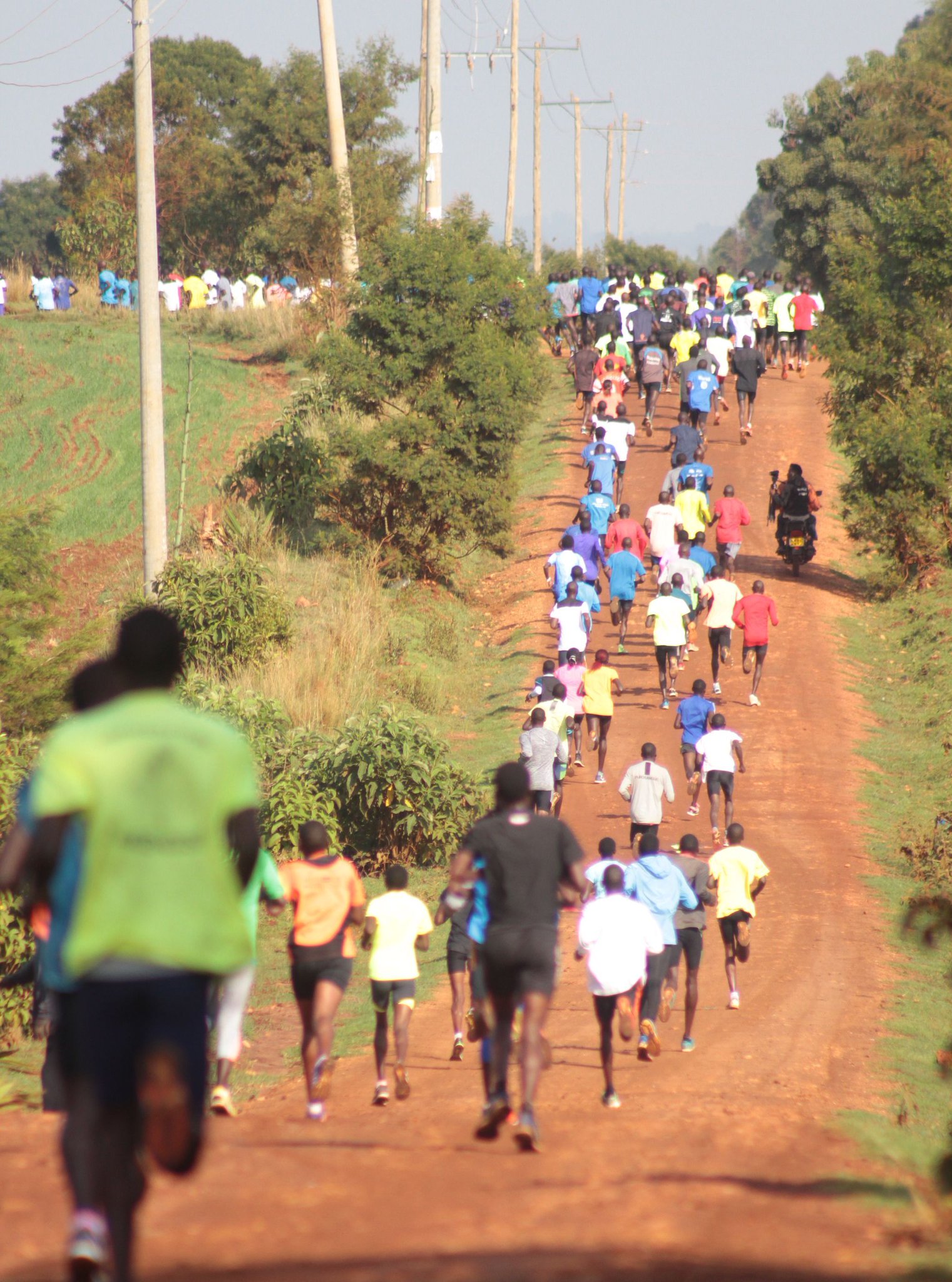
Kenyan Fartlek: My favorite fartlek workout for this time of year is 1 minute on at 5k pace and 1 minute off at recovery pace. As you can see from the picture below, this is a famous workout done in Kenya with hundreds of athletes. The Kenyan Fartlek can be run in a park or on the track and is great for those windy or cold days when it’s hard to hit times in a more structured workout on the track. For our higher mileage athletes, we start our running at 30-40 minutes total, and for our lower mileage athletes, they run for 20 minutes total. Like the 200-meter repeats, I’m not overly concerned about their recovery pace and just want them running.

Threshold Reps

For those of you who have been following this website for a while know I love threshold reps. Threshold reps can be difficult especially for younger athletes. During the beginning of the track season reps can be shortened to 800-1000 meters. After each repetition athletes take 1 minute standing rest. For the threshold reps in the beginning of the season 60-75 seconds slower than their mile PR pace is a great starting point. Athletes who run more mileage (greater than 50mpw) can shoot for 8,000 meter worth of volume and athletes running less can shoot for 6,000 meters worth or volume.

Strides: This last one isn’t really a hard workout, but more of a reminder to keep in strides during the winter. Strides performed after distance runs can help athletes transition to faster track workouts, ensuring that they maintain their speed. I like to rotate between doing 6×50 meter strides and 6×100 meter strides, When we run 50 meter strides, I notice the younger athletes, especially, will run significantly faster. It’s important to incorporate these strides early in the season to help bridge the gap from distance runs to faster track workouts.

Taking a break from running

After a long and (hopefully) successful season, most athletes and coaches are ready to take some time off. Athletes need a physical—and sometimes more importantly—a mental break from training and racing. In Texas, we start our season in August (don’t ask me why so early), and if fortunate, continue to race through the state meet in November. If we are very fortunate, we might even qualify for the Nike Cross Nationals meet in December. The big question is: Why should we take time off from running, and for how long?

The Importance of a Mental Break

During my time as a collegiate athlete, I was able to train very hard and stay healthy. Running 10 to 15 miles a day was something I could handle—and most of the time, enjoy. However, after training and racing through cross country, indoor track, and outdoor track, I noticed I wasn’t just physically tired but also emotionally drained.

Training at a high level is difficult and not something we, as coaches or athletes, should take for granted. Running a hard tempo or cranking out intervals is tough on both the mind and the body. An athlete must be mentally ready for the challenge, the pain, and able to push themselves in order to improve or maintain their level of fitness.

Taking a break can help athletes avoid burnout and re-energize themselves for the upcoming season. During this time, I prefer our athletes focus on spending time with their families and friends. If they feel sluggish and want to do something active, engaging in different activities—like playing pickleball or going for a hike—is great.

How Long Should Athletes Take Off from Running?

When determining how long an athlete should take off, it’s important for coaches and athletes to evaluate the athlete’s health throughout the season. Typically, athletes fall into one of the three categories below:

1. Athlete Finished the Season Healthy and Strong

I hope most of our athletes fall into this category. For these athletes, we take a one-week break from training. Athletes are free to do other forms of cross-training, but I prefer they stay away from the elliptical and bike, as those are part of our usual training throughout the season.

After the one-week break, we start with 50% of their average mileage from the past season.

Example: An athlete who runs 40 miles a week and their first week back running:

  • Monday: 3 miles + strength training (med ball/core)
  • Tuesday: 4 miles + 6 x 50-meter strides
  • Wednesday: 4 miles + strength training (med ball/core)
  • Thursday: 5 miles + 10 bleachers
  • Friday: 4 miles + strength training (med ball/core)
  • Saturday: Optional short run or day off
  • Sunday: Off

Additionally, during the first week, the pace of the runs should be 15 seconds slower than usual. For example, if an athlete typically runs 8:00-minute pace on recovery/distance runs, it’s perfectly fine for them to run 8:15–8:30 pace. Usually, after the first week back, athletes naturally start running at their normal pace again.

2. Athlete Had a Minor Injury but Was Still Able to Compete

Some athletes may have reduced mileage due to a minor injury or had to cross-train more instead of run in order to participate. For these athletes, I prefer taking longer than a week off and using this time to focus on physical therapy and cross-training.

Once the athlete no longer experiences pain while walking, we progress to a gradual running program—usually running every other day and starting at 50% of their usual recovery run distance during the season.

Example: An athlete who typically runs 6 miles a day:

  • Start by running 3 miles a day, only on Monday, Wednesday, and Friday. On the off days start with 30 minutes of cross training on the bike.

3. Athlete Was Unable to Finish the Season Due to an Injury

For these athletes, we follow the advice of doctors or athletic trainers regarding how to proceed. I always aim to be extra cautious, as the last thing I want is to push them to run before they are healthy. We ensure a gradual return to running, proceeding only when the athlete is pain-free.

During this time, it’s important for athletes to cross-train to maintain their fitness. Even when they are slowly returning to running, we include workouts on the bike or elliptical.

Example: If an athlete’s running program starts with a 1-mile run, we’ll supplement it with a 30-minute fartlek on the bike.

When to Start Doing Hard Workouts

After a few weeks, we begin reintroducing hard workouts. I usually prefer starting with something manageable on the track, like 8–10 x 200 meters with a 200-meter jog at 1600-meter race pace. We also incorporate easier fartlek workouts, such as 1 minute on and 1 minute off for 20 minutes at a local park.

It’s important to be patient and build back into harder efforts slowly, preparing for the track and field season.


Next Blog Post?

If you have any suggestions, please let me know!

Running In The Heat Part One

The school year is over, and we are now officially beginning our summer training. Everyone wants to have a great summer so we can do well in the fall cross country season. Unfortunately, in Texas, the summer is the most difficult time to train. The heat and humidity can be unrelenting, and it’s easy to struggle with our training and stay motivated when the low temps for the day creep into the 80s, and the highs surge past 100 degrees.

I went to school at Texas A&M University and ran on our cross country and track teams. During the summer, I chose to run at night instead of in the morning. I found the humidity to be slightly better at night, although the temperature was higher. Somehow during my senior year I managed to run over 100 miles a week. It wasn’t particularly easy, but I don’t remember letting the weather get the best of me. I was focused on the fall and felt that the summer weather would only make me tougher.

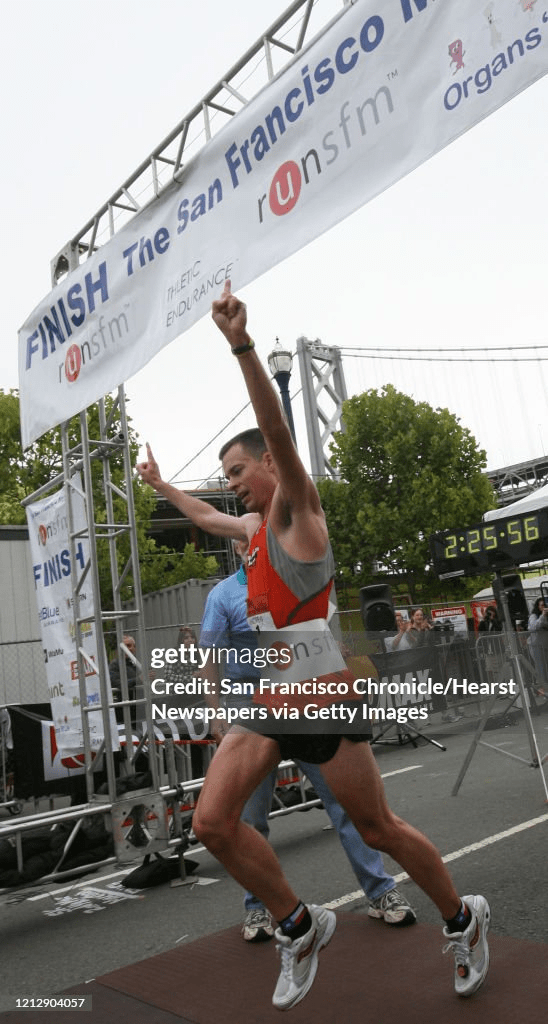
When I graduated from Texas A&M, I began to train for marathons. I found training for marathons was easier for me during the summer when I was not teaching and coaching. I won the San Francisco Marathon three times, which takes place in late July, while doing most of my training in the hottest time of the summer.

Winning the San Francisco Marathon in 2007 (long time ago!)

.In this part one of two are some things I have done personally myself or with our team in order to train successfully in the heat.

ATTITUDE

Probably the most important thing is having a positive attitude. The heat and humidity are something that most athletes will have to face over the summer. Complaining about the weather only makes things more difficult for yourself and your training partners. I tried to look at the heat as something that was making me physically and mentally tougher. I felt if I could get in tempo runs or long runs during the summer, then imagine how fast I would be able to run once the weather cooled off.

I also feel that leaders of the team, whether they are the coach or the athletes, need to have a positive attitude. Focus on something other than the heat and humidity. Everybody knows it’s hot, and there’s no point in the leaders dwelling on that fact. For leaders, it’s a great time to focus on something else like the short list below.

Seven Great Positive Thoughts

  • Great to spend time with my friends
  • Great to be doing something I love
  • Great to be getting better today
  • Great to be doing something that makes me healthy
  • Great to be setting a positive example for others
  • Great to be focused on my goals
  • Great to be healthy and able to run each day

MODIFYING WORKOUTS

Obviously, having a positive attitude will only get you so far. When it comes to training, it’s important to adjust paces as necessary and be realistic.

Recovery Runs

For recovery runs, I think it’s best to shoot for 15-30 seconds slower per mile. If the run is to be a recovery run, it’s important that we focus on effort and not become too obsessed with pace. For example, during the spring, maybe an athlete with a 5-minute mile PR runs their recovery days at a 7:30 pace. During the summer, it may be smarter to run closer to 8:00 minutes, depending on the temperature that day.

I also know many athletes and teams have had success by going for runs based on time instead of a set number of miles. For example, that 5-minute miler we just talked about may go for a 40-minute run instead of running for 5 miles. They most likely will get in the same distance, but they will feel less pressure to push for a certain pace they may have run under cooler conditions.

Long Runs

When I was training to qualify for the Olympic Trials I would run every other long run at a hard effort and focus on hitting marathon pace for the second half. I would also run up to 24 miles in order to prepare myself for “the wall” at the end of marathons.

When training for the San Francisco Marathon I had to be realistic. I would keep the distance to 20 miles or less. I also would avoid marathon pace or harder efforts during the long runs and save that for other workouts during the week.

For high school athletes I feel it’s important to keep longs run at 20 percent of their weekly mileage. Like the recovery runs, I would also consider going for a set amount of time when the weather really heats up.

Also, it’s important to make sure there is water available every 30 minutes. Make sure to pick a loop that doesn’t get too far away from the starting point. If running longer than an hour, make sure there is water every 15-20 minutes.

Workouts

For workouts, I prefer to modify the pace, distance, or rest between repetitions to account for the temperature.

One quick example for modifying a 4-mile tempo run at a 6:00 pace:

  • 4×1600 @ 6:00 pace with 1 minute rest on the track. Athletes can stop after each repetition and get water.
  • 2×12 minutes on the road or grass with 2 minutes standing rest. Can focus more on effort and not stress on the exact pace. Athletes can run in a park with access to water.
  • Progressive out and back 4-mile tempo run. Run 2 miles out at 6:15-6:20 pace, turn around, and try to run faster on the way back.
  • 2×15 minutes on the road or grass with 3 minutes standing rest. Athletes can run for a longer time but at a slower pace.

Another way to modify workouts is to adjust paces by running repetitions at one event up from your goal pace. For example, if running a 1600 meter pace workout, maybe shoot for 3200 or 5k pace instead.

CCCAT CLINIC AND HAVE A GREAT SUMMER

I’ll be speaking at the Cross Country Coaches Association of Texas Clinic this summer. Topic is Cross Training for Distance Runners. I’ll be speaking in detail over cross training and ways to implement it into your training.

You can purchase the power point I’ll be going over https://distancecoach.gumroad.com/l/lvzpi?layout=profile

You can register for the clinic at this link https://www.cccat.org/member-form.html

I hope everyone enjoys their summer and is able to stay healthy and successfully train for their next race. I’ll try and post more this summer and stay tuned for PART II of Running in the Heat

Racing for place

The World Indoor Championships took place this past weekend in Glasgow, Scotland. The United States did very well, winning 20 total medals. One of my favorite races was the women’s 3000-meter run where Elle St. Pierre upset the favorites to win in a new American record time. Elle tucked behind the leaders for almost the entire race before kicking to the win in the last 50 meters. I’m sure she was more excited about winning a gold medal than breaking the American record.

Racing for Place

Anytime an athlete sets a PR, we make sure to congratulate them on a great performance. At that time, they are the fastest they have ever been. I think PRs are something that should be celebrated, but I also think it’s equally important to be excited about their placement in races. For example, how often do we congratulate an athlete on their sixth-place finish and scoring one point for the team? I’m guilty of focusing on our medal winners and need to do a better job of taking notice when an athlete places higher in a race than normal. This is also something that is very easy to do in cross country. Not sure when we became so obsessed with times in cross country, but that is a rant for another day!

With those athletes who are not fighting to win a race, we spend a lot of time talking about PRs and splits throughout the race. Encouraging those athletes to kick to the finish or emphasizing the importance of running through the line is equally important when it comes to their development as runners.

One of my favorite things about racing in track and field is the strategy. Athletes with great closing speed may be more inclined to wait for that last 400 or even 100 meters of a race before surging to the front. On the opposite end athletes who may not have great closing speed may try and break away from the beginning of the race or make a surge during those tough middle laps. As coaches I think it’s our job to help prepare our athletes for both scenarios, but obviously we need to take into account their strengths and weaknesses.

Workout examples for a fast finish

  • 4-5×1000 meters at tempo pace with 1 minute standing rest, 2×400 @ 1600 pace with 2 minutes rest, 2×200 @ 800 pace with 3 minutes rest
  • 3(3×300) first set with 100-meter jog recovery, second set with 200-meter jog recovery, and third set with 400-meter jog recovery. Start at mile pace and work down to 800-meter pace
  • 3(800, 200)- 800 @ mile pace plus 5 seconds, 200 fast, but not quite all out. 2 minutes rest after the 800 and 7 minutes rest after the 200.

Dream, Believe, Achieve

My second year at Flower Mound High School, we had a very good miler named Connor Adams. He was positive, hardworking, and, most importantly, a confident athlete. He loved to say, “Dream, Believe, Achieve.” He even tattooed the quote on his shoulder his senior year (not sure that was necessary!).

Leading up to the state meet, he was running fast times but was unable to win, placing second at district and region. In the month leading up to the state, we worked on his closing speed. His last big workout was 3(800,200) that is listed above. His splits for the workout were 2:03, 29, 2:02, 28, 1:59, 27. The workout wasn’t easy, but he knew afterwards that he could finish fast.

When the gun went off, the pace was very slow. Many of the athletes had run the 3200 earlier that morning and didn’t want an all-out mile. Satisfied with the early slow pace, Connor waited to make his move. With 800 meters to go, he surged to the lead. He ran his last 800 meters in 1:59, just like in practice, and won the state championships by 10 meters.

Workout examples for a mid-race surge

  • 4(800,400)- 800 @ 3200 race pace and 400 @ mile race pace. 2 minutes rest after the 800 and 3 minutes rest after the 400’s
  • 2(2×1600 @ tempo pace with 1 minute rest, 2×400 @ 1600-meter pace with 2 minutes rest)
  • 2(3×1000 @ tempo pace with 1 minute rest, 4×200 @ 800-meter pace with 2 minutes rest)

Middle Lap Surge

The following year we had another great miler named Connor Ward. Connor had broken 5 minutes for the mile that year, and I felt she was one of the favorites to win at state. Connor had a great kick the last 200 meters but had lost at district and region by not being able to follow the leaders on the third lap. We tried to focus on mixed pace workouts like the (800,400) workout above to help her handle surges during the race. Her splits for that workout were (2:36,72) (2:34, 72) (2:32, 70) (2:28, 70). At the state meet, Connor’s biggest competitor surged to the front, breaking away from everyone except Connor. She stayed with the leader until the last 200 and kicked away to a comfortable state win.

Hammer from the front

The last strategy and the one most commonly used to is to just hammer from the front. If an athlete feels they are the fittest in the race why not push the pace and run as fast as possible? How many times have we watched the Olympics and wondered why more runners don’t push the pace from the front? In the Olympics the athletes are usually very evenly matched and it’s a big risk to set the pace and block the wind for the other competitors. In high school there are time gaps in PR’s and sometimes it’s best to go for it and try to break away.

When my daughter Natalie was a senior we focused on running as fast as possible.We figured correctly so that if she went out in under 5 minutes for the first 1600 of a 3200 or in 2:16 for the first 800 of a 1600 most athletes would not follow. It would have been foolish to put her in a sit and kick position when her PR was faster than the rest of the field.

What’s next

I hope you enjoyed reading and best of luck to everyone this track season. We are going to compete at the New Balance Indoor Nationals in the 4×1 mile, DMR, and some individual events. Currently we are the 4×1 mile national record holders, but there are many great teams that look to challenge for the title. Should be a great meet!

Goal Setting

Cross Country season is over and it’s now time to prepare for the upcoming track and field season. After taking a complete break from running we slowly build the duration and intensity of our workouts. Athletes begin to get excited about competing again and running personal records on the track. I feel goal setting is very important in keeping our athletes focused and motivated for the duration of the track and field season.

I send out a google form to our team and ask them to fill out three type of goals

1: Individual Goals– Individual goals are focused on times they want to run that season. Individual goals also include things like wanting to run on varsity or place top three in one event at district.

Feedback I give for individual goals are whether they are achievable for that season. If a goal seems a little out of reach I will ask them to include a short term goal as well just in case they don’t reach that ultimate goal. For example if a 5:10 miler wants to run 4:40 and 10:00 I may encourage them focus on breaking 5 minutes in the mile first.

2. Process Goals– What are they going to do in order to reach their goals for the season? Often times they list something training related like run 10 percent more miles each week, but most of the time kids list something like getting 8 hours of sleep or eating more fruits and vegetable at each meal.

Feedback I give for individual goals is to make sure they are measurable. Don’t just put down get more sleep or drink more water. I’ll also give them some constructive criticism like focus on being more consistent in your training and run 6 days a week. I’ll also focus on the little things like make sure you show up to practice on time and complete all strength training exercises.

3. Team Goals- Track can be a very individual based sport. I want our athletes focused on how they can not only make themselves better but their teammates as well. If we have a great chance to win district for example I want our entire team focused on that goal.

Feedback I give for team goals is to let them know that I’m excited about the team as well. The team is an important aspect in track and field I want them to know what they can do to help us have a successful season. When we focus on the team I hope we will get less students asking to sign out before the conclusion of the meet or kids more willing to step up and run that 4×400 Relay.

Here is the link (click the picture) to the goal sheet form we used this year for our track and field team. Feel free to make a copy, edit and use for your team.


And one last story to share on why goal setting is important to me: During my time as a student athlete at Texas A&M, I had the privilege of listening to a speech by Billy Mills. Billy Mills is known for being the 1964 Olympic Gold Medalist in the 10K (my event in college!). His victory is still considered one of the biggest upsets ever. One thing I will always remember is his personal story on goal setting for the 1964 Olympics. He asked the crowd to raise their hands if they set goals and of course with a room full of collegiate athletes, we all raised our hands. Then he asked who had their goals in a place they could see them every day; half of the room continued to keep their hands raised. Lastly, he asked who had their goals on them that night; all of the athletes lowered their hands. He then pulled his wallet from his pocket, opened it, and showed the room an old folded piece of paper. On that paper he told us was his goal for the 1964 Olympics, which was to win the gold medal.

Billy Mills at the 1964 Tokyo Olympics